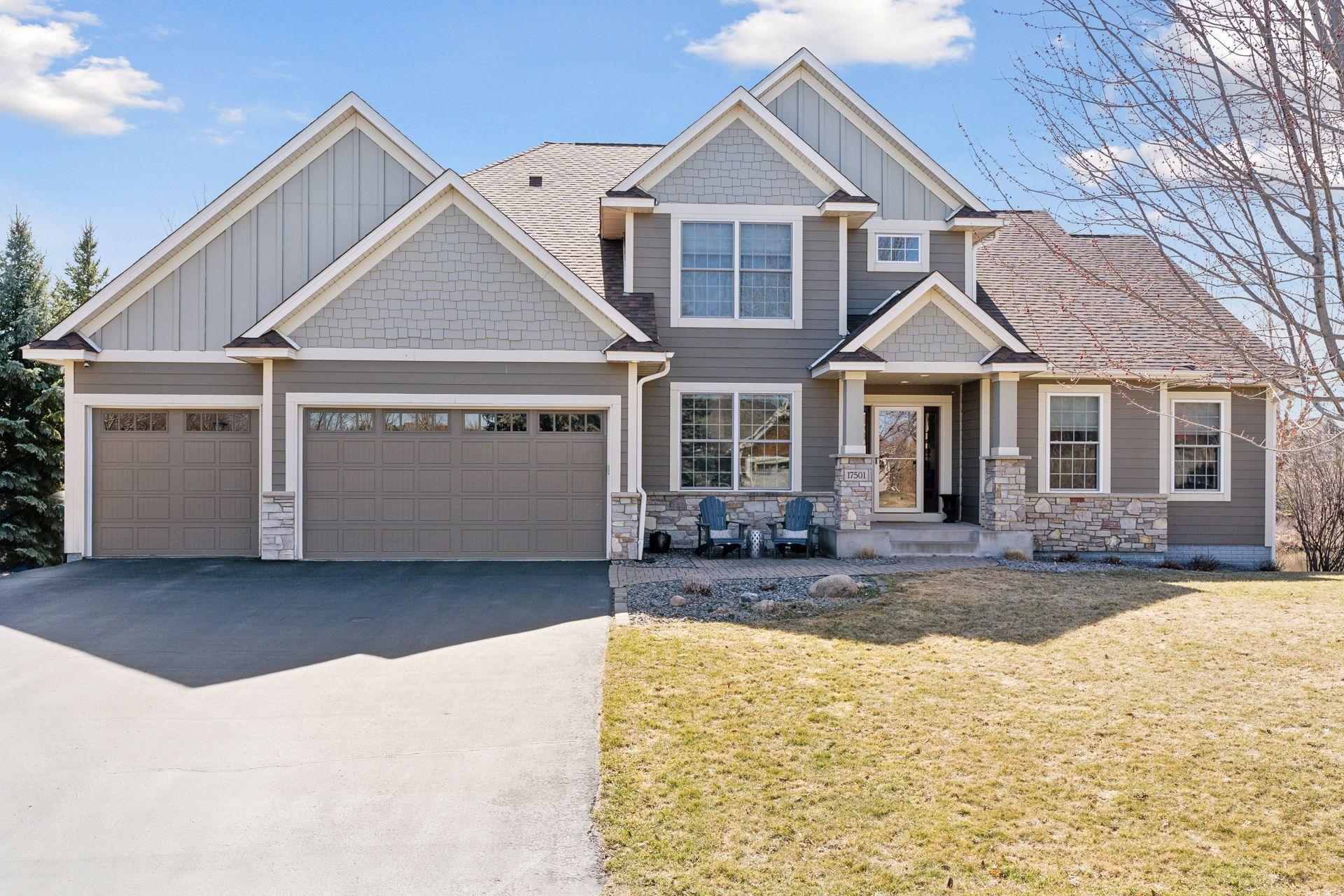
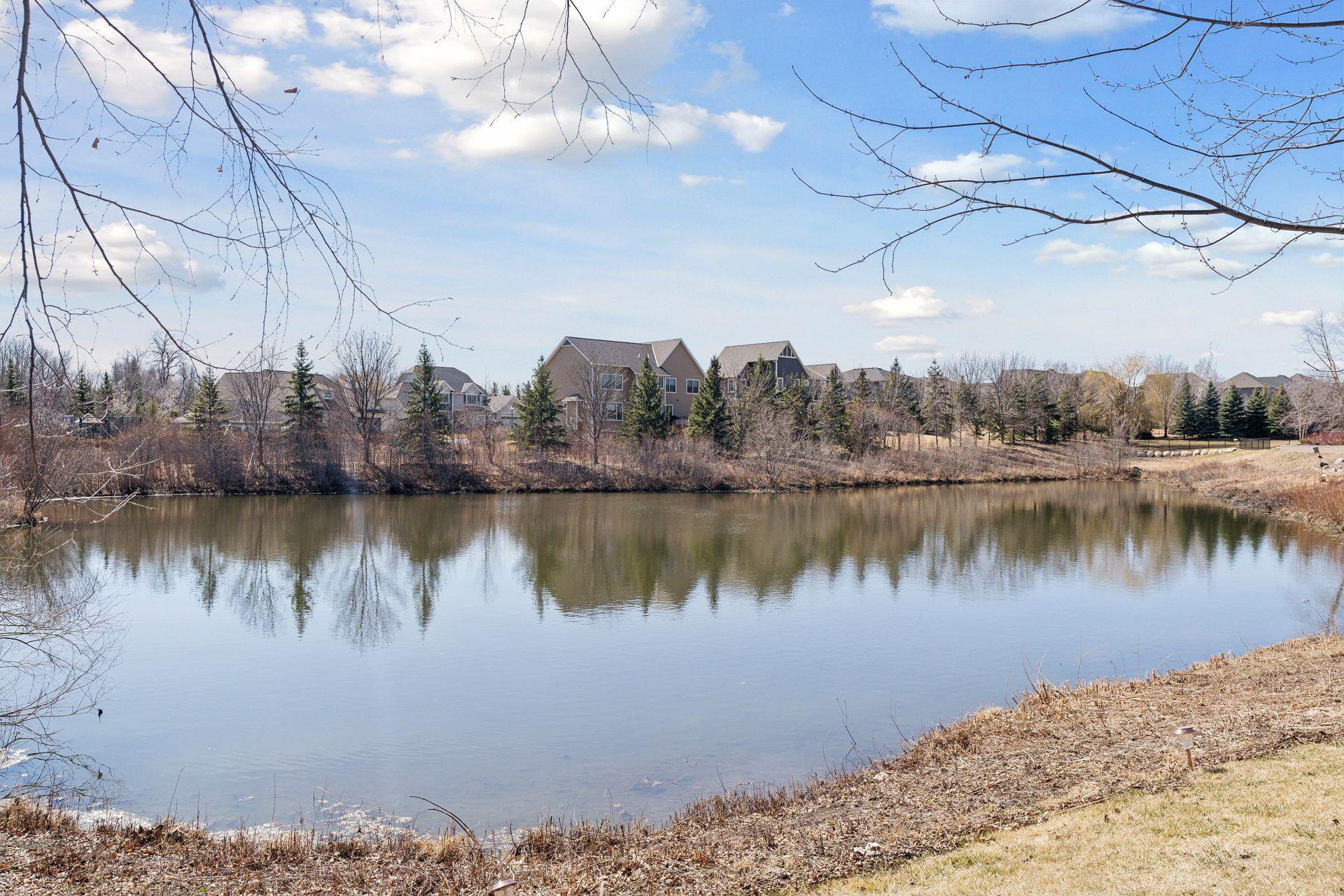
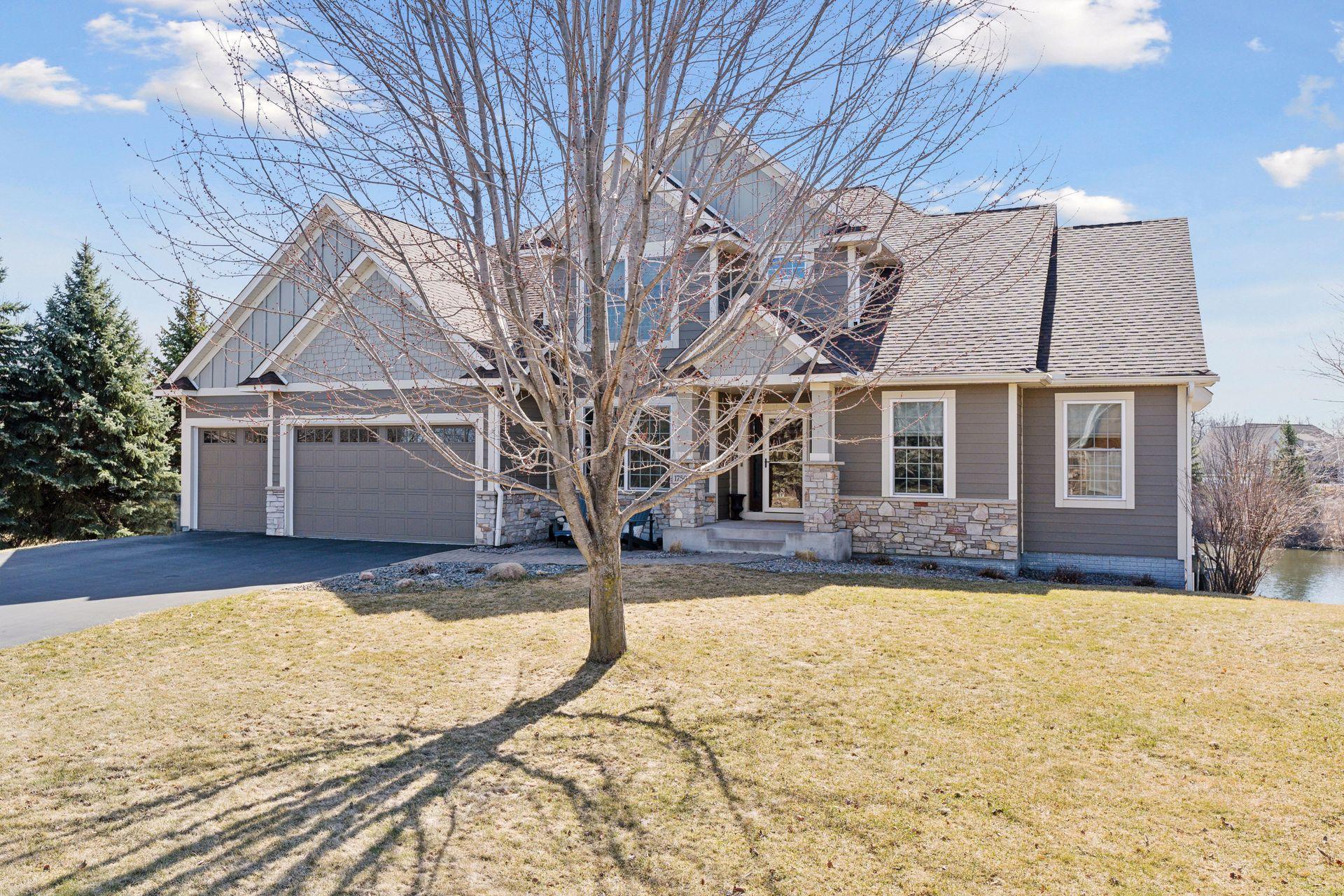
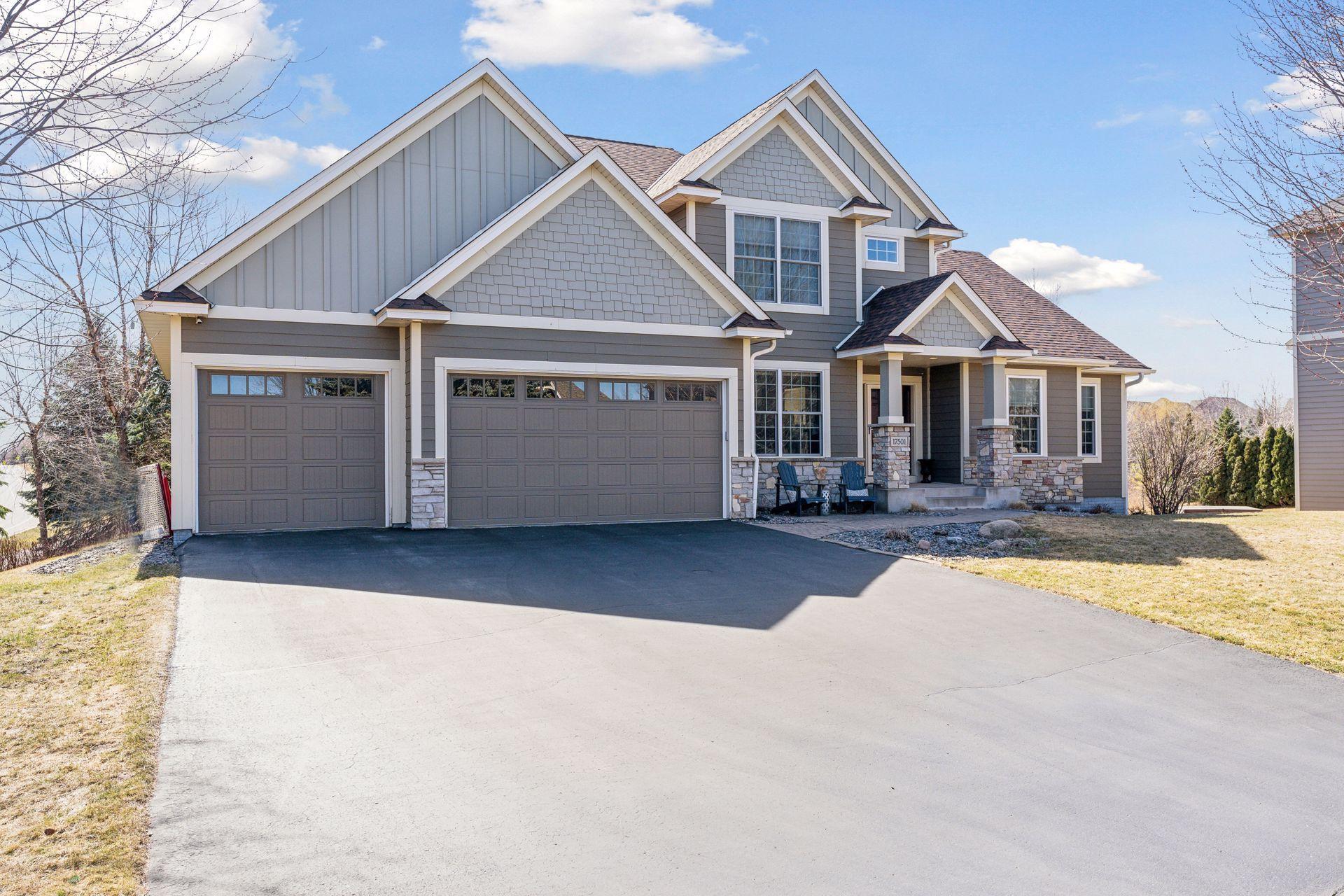
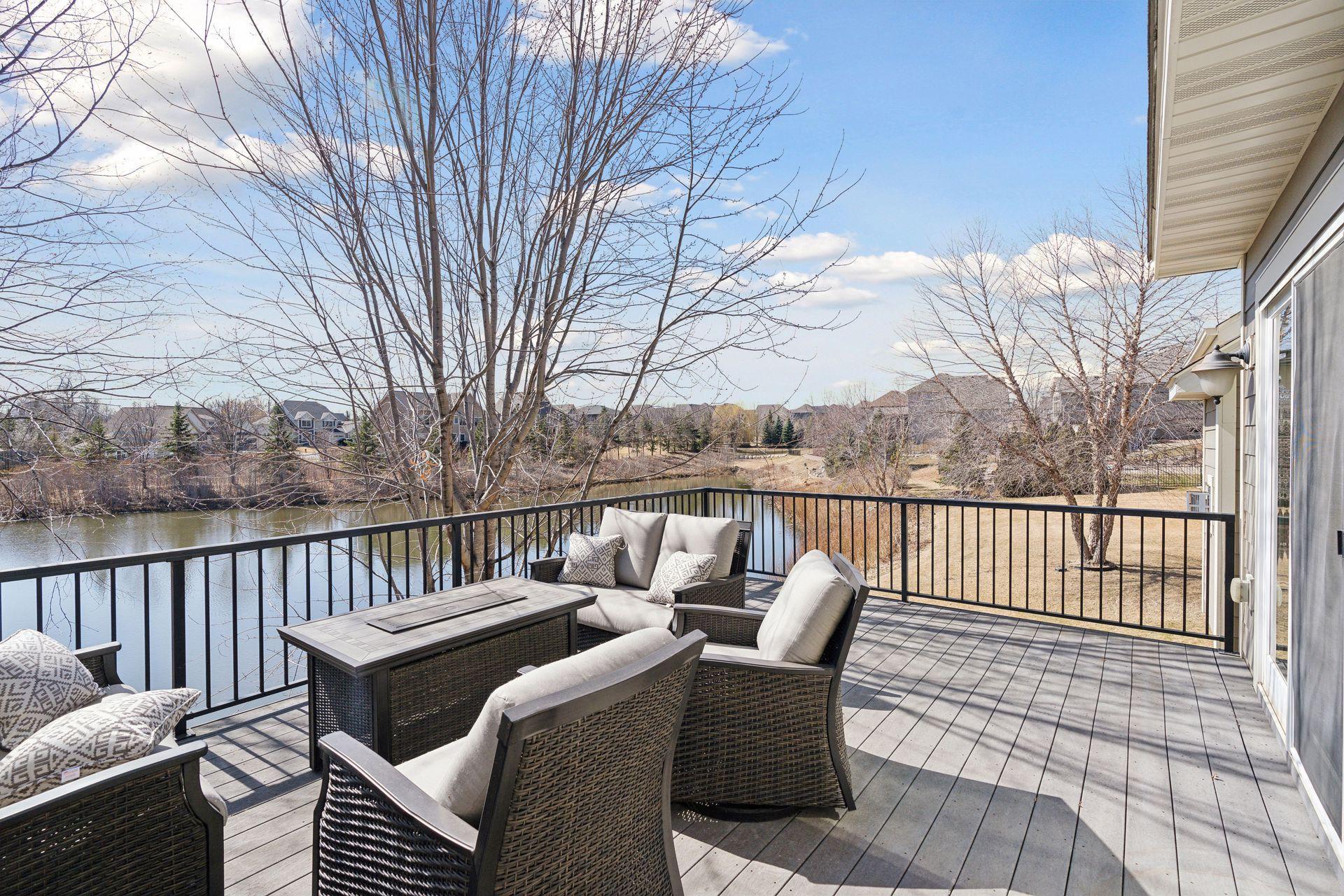
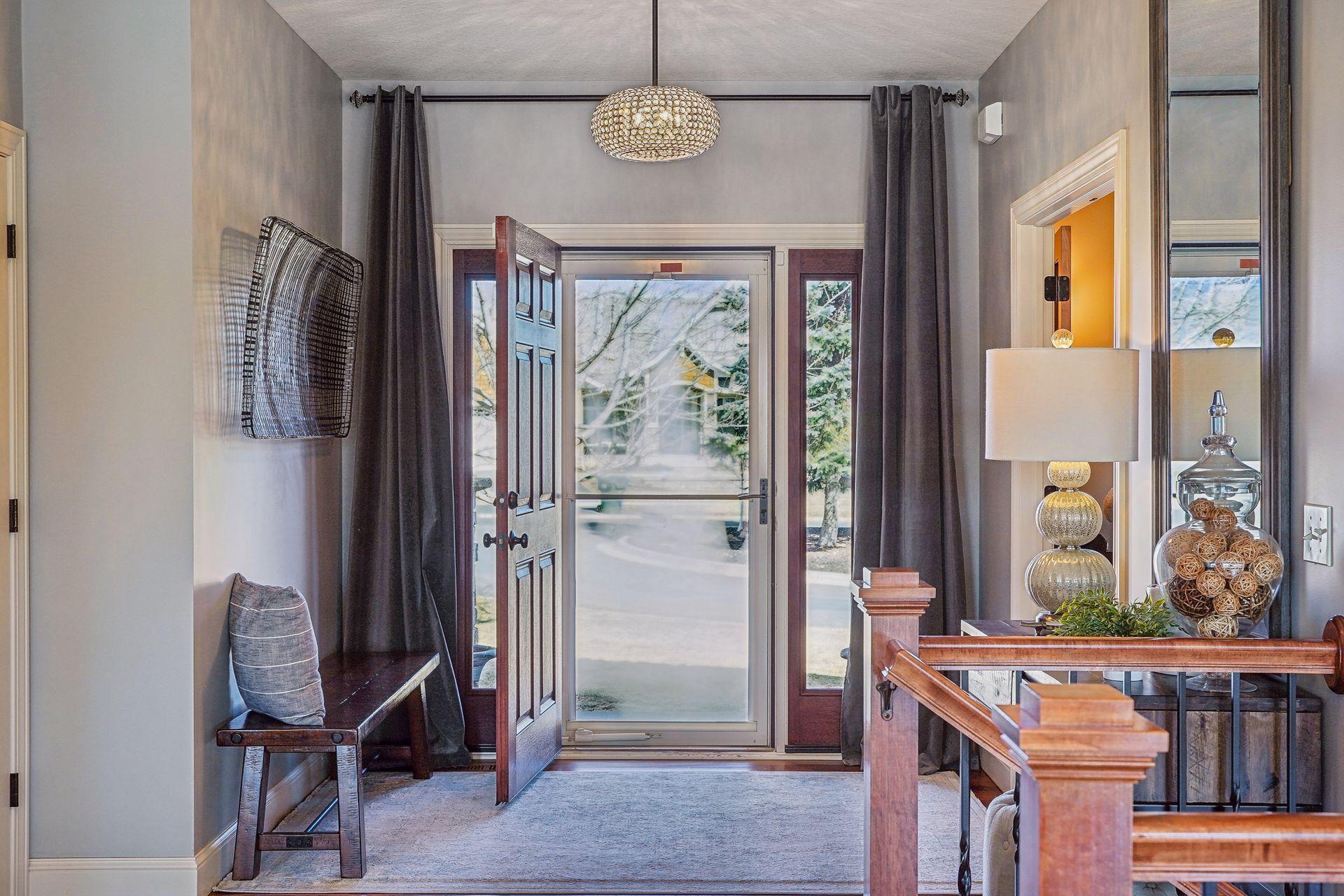
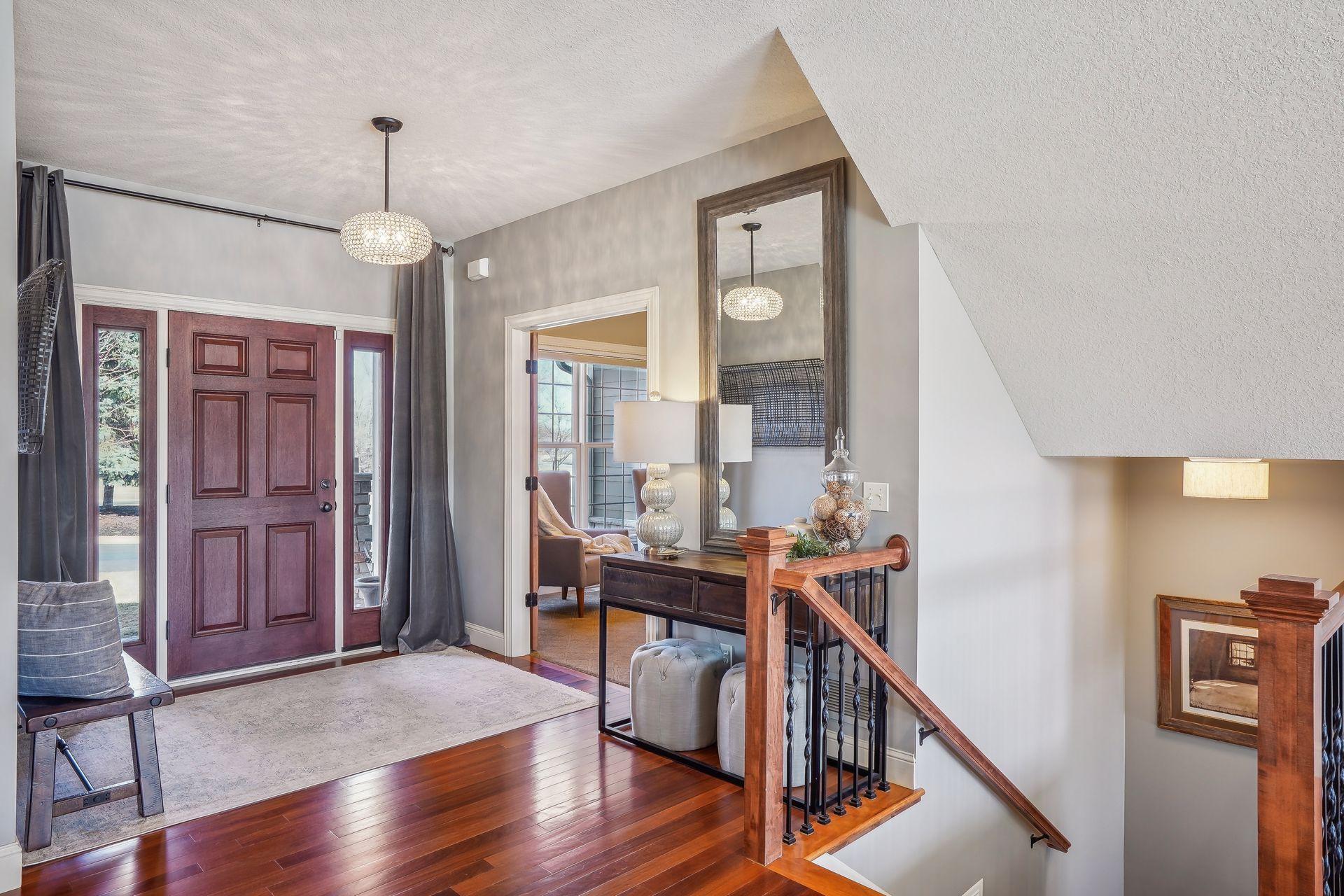
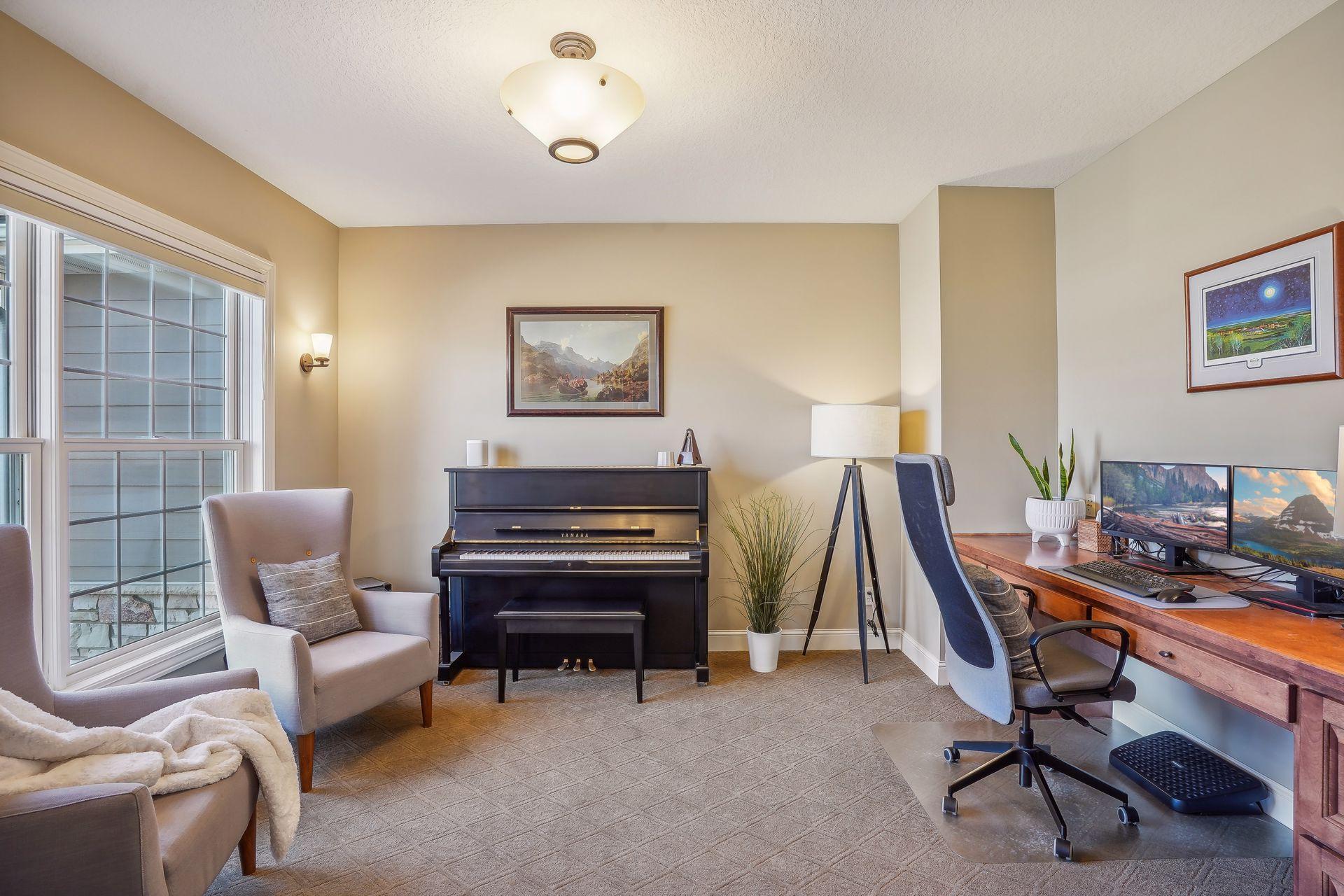
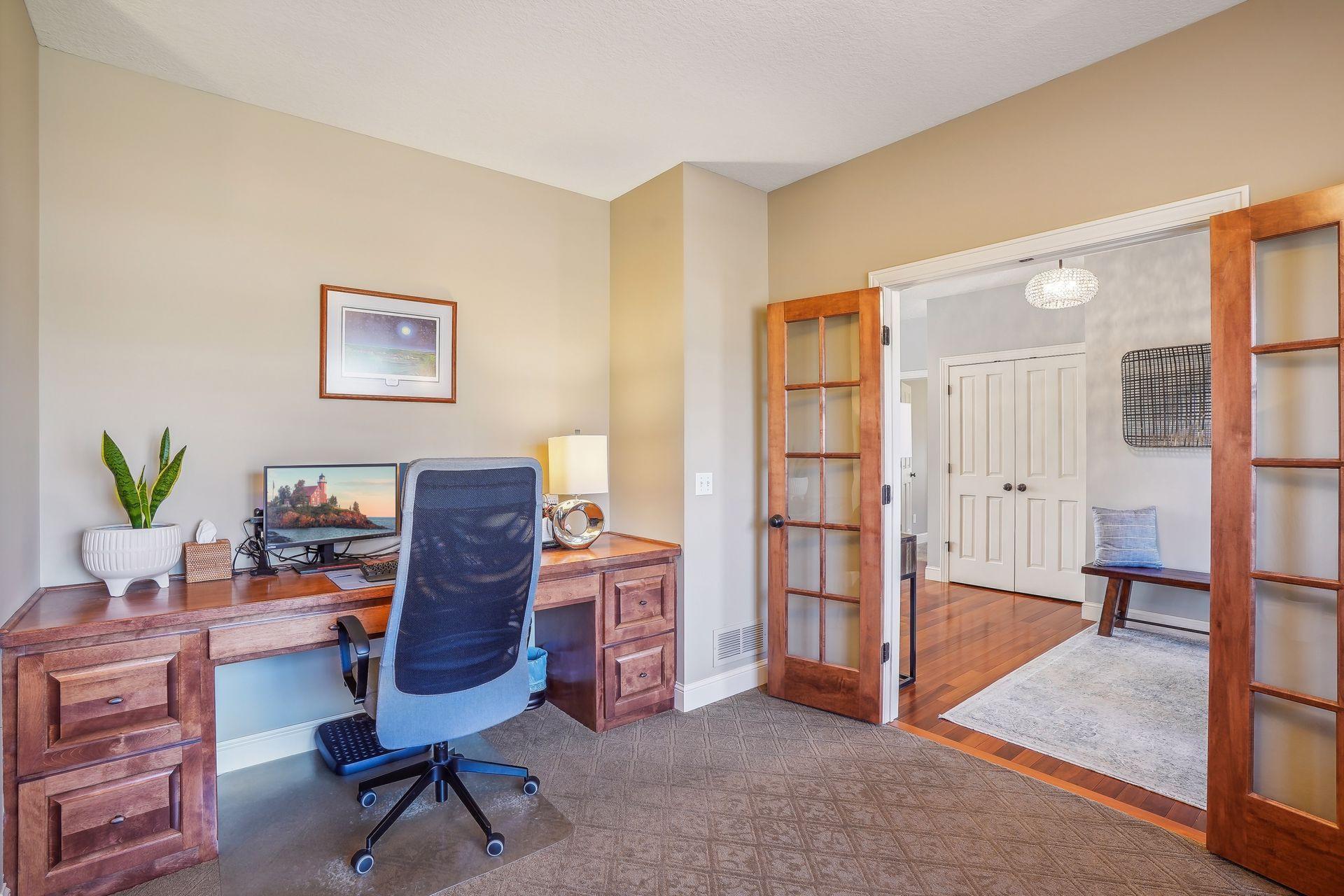
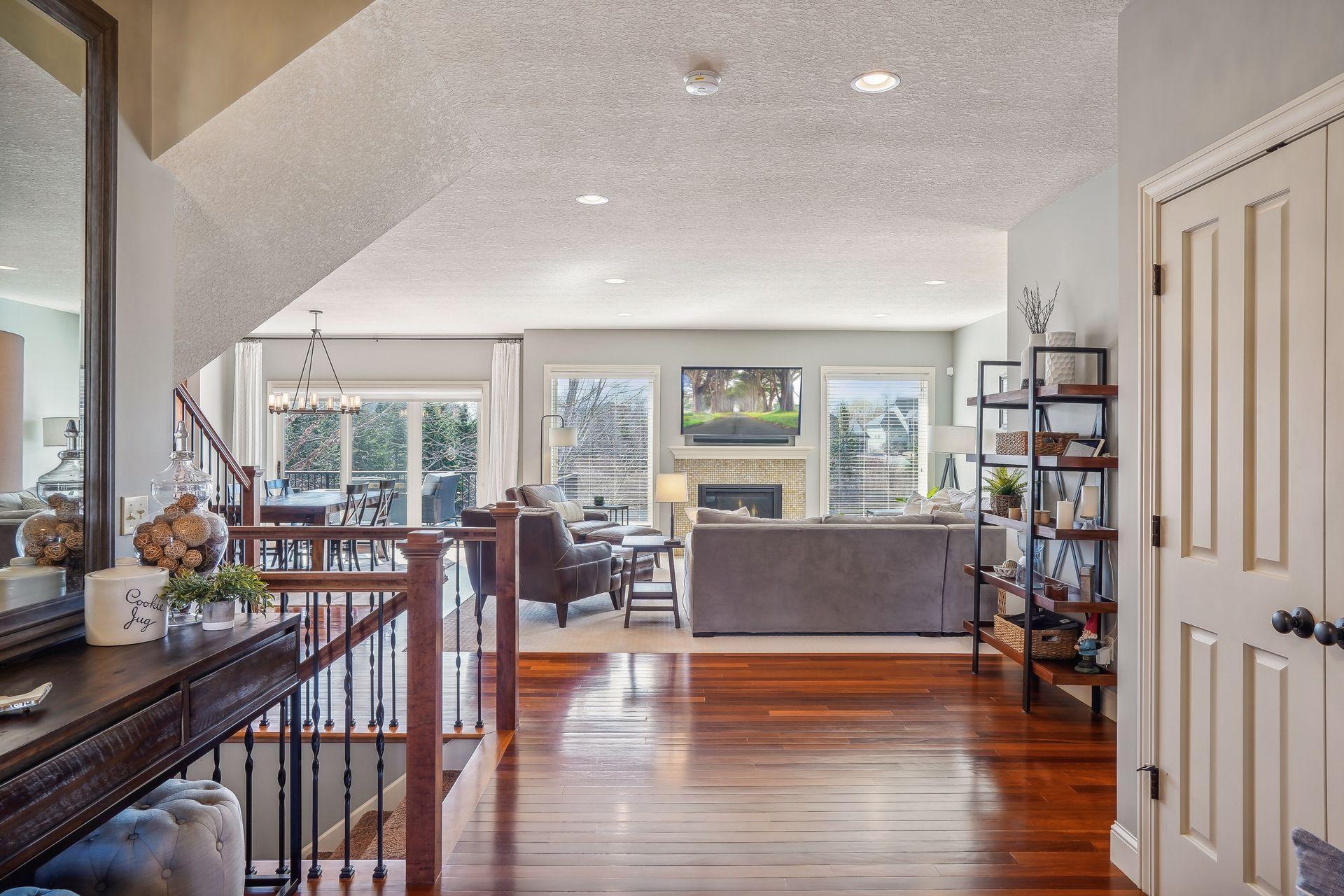
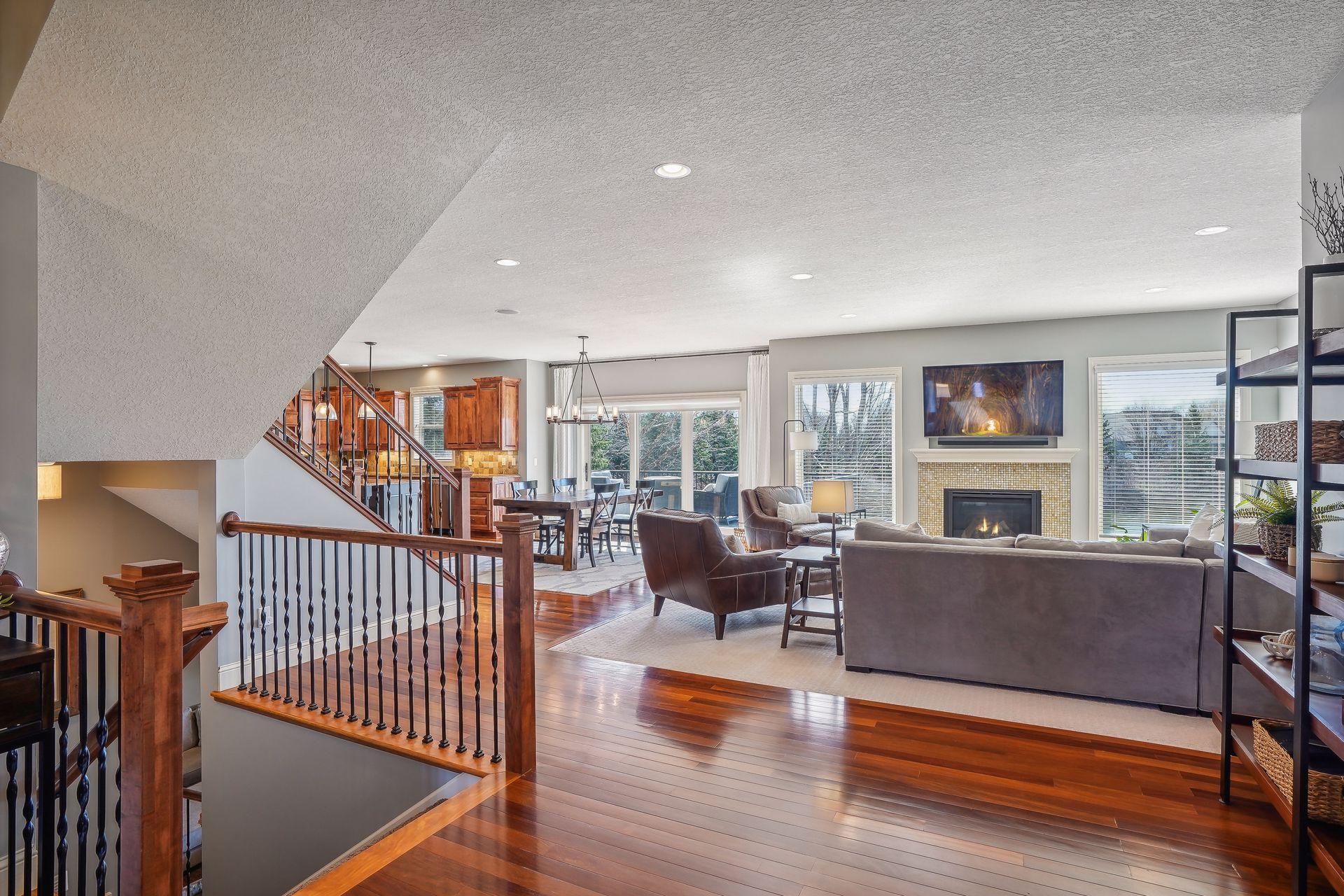
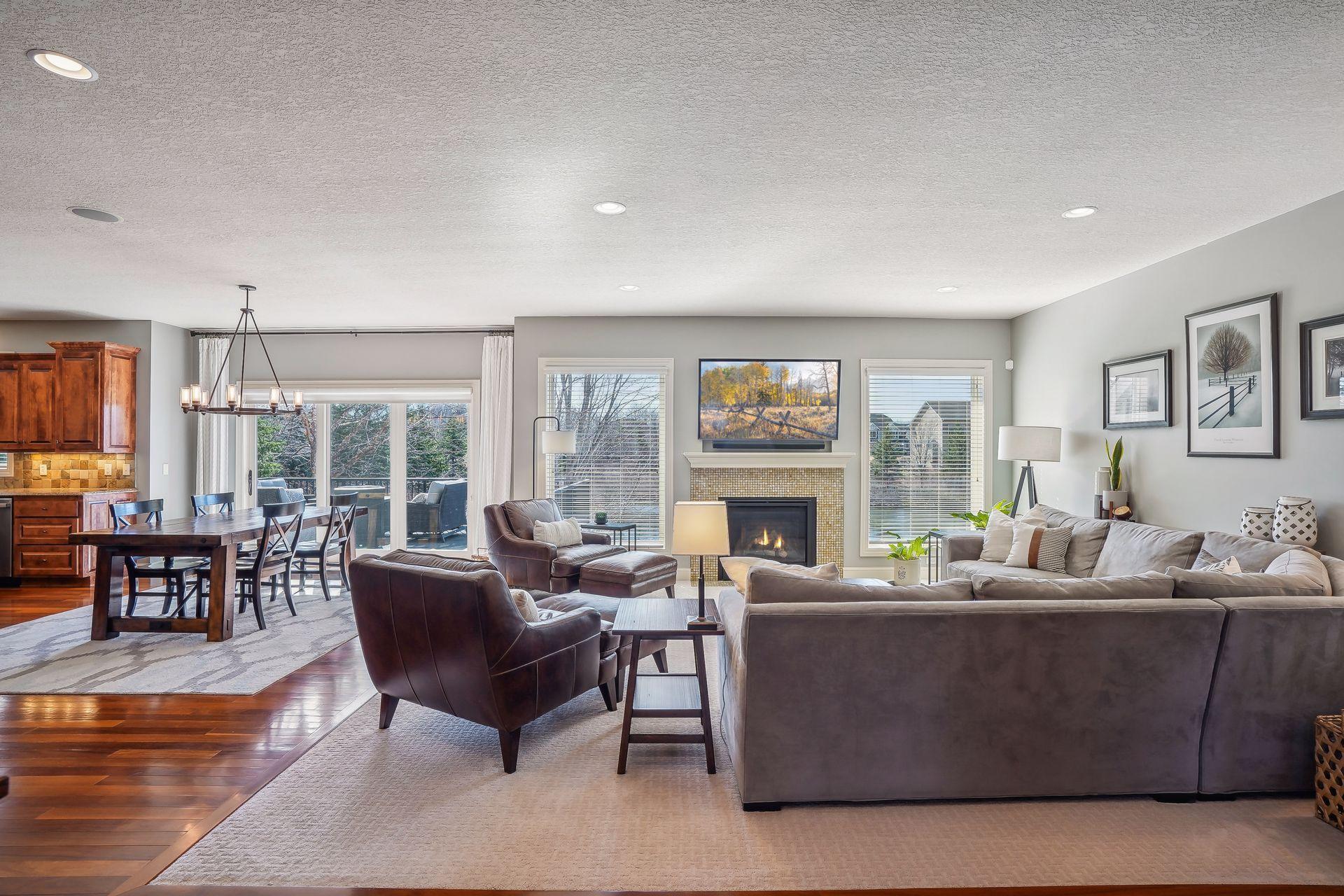
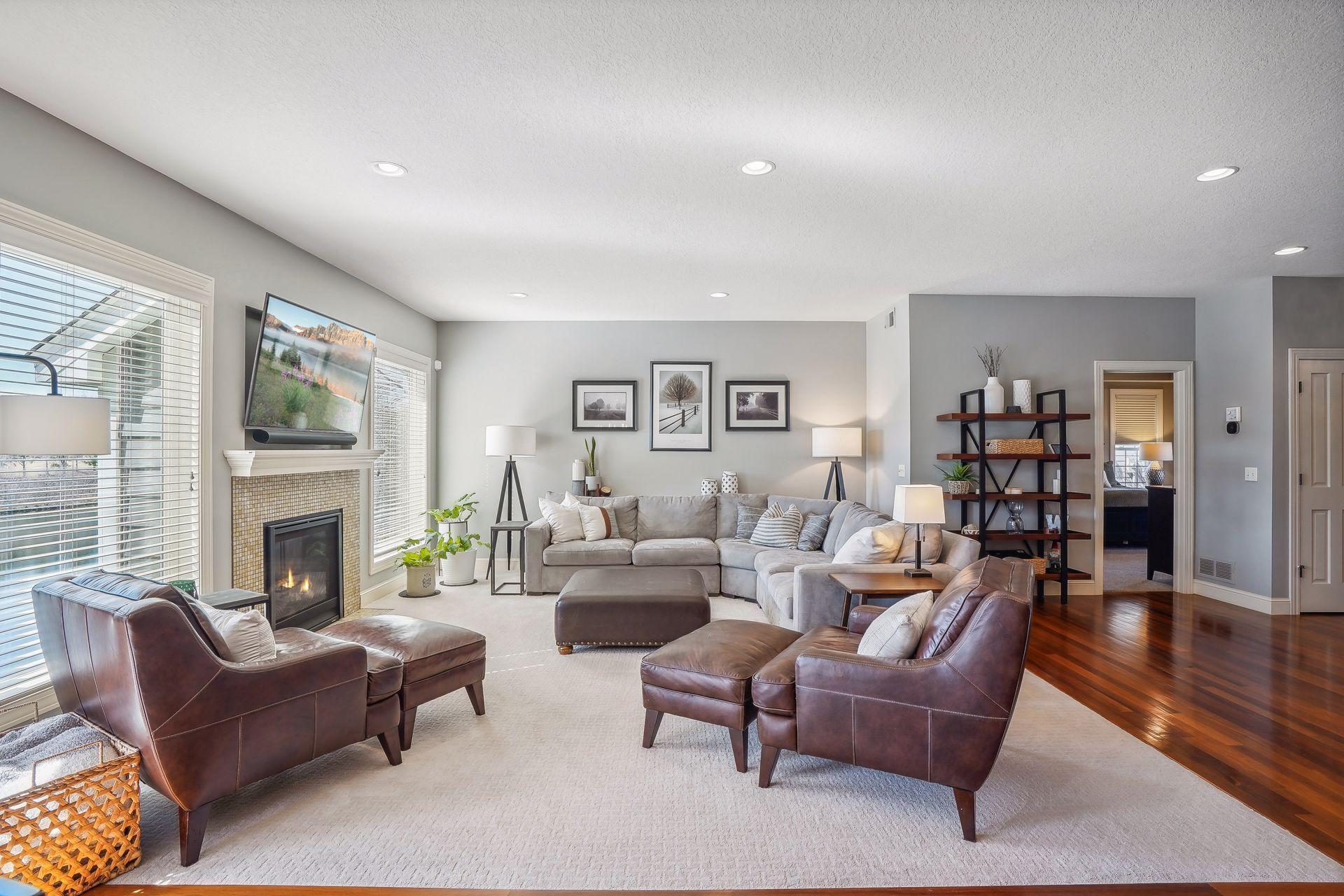
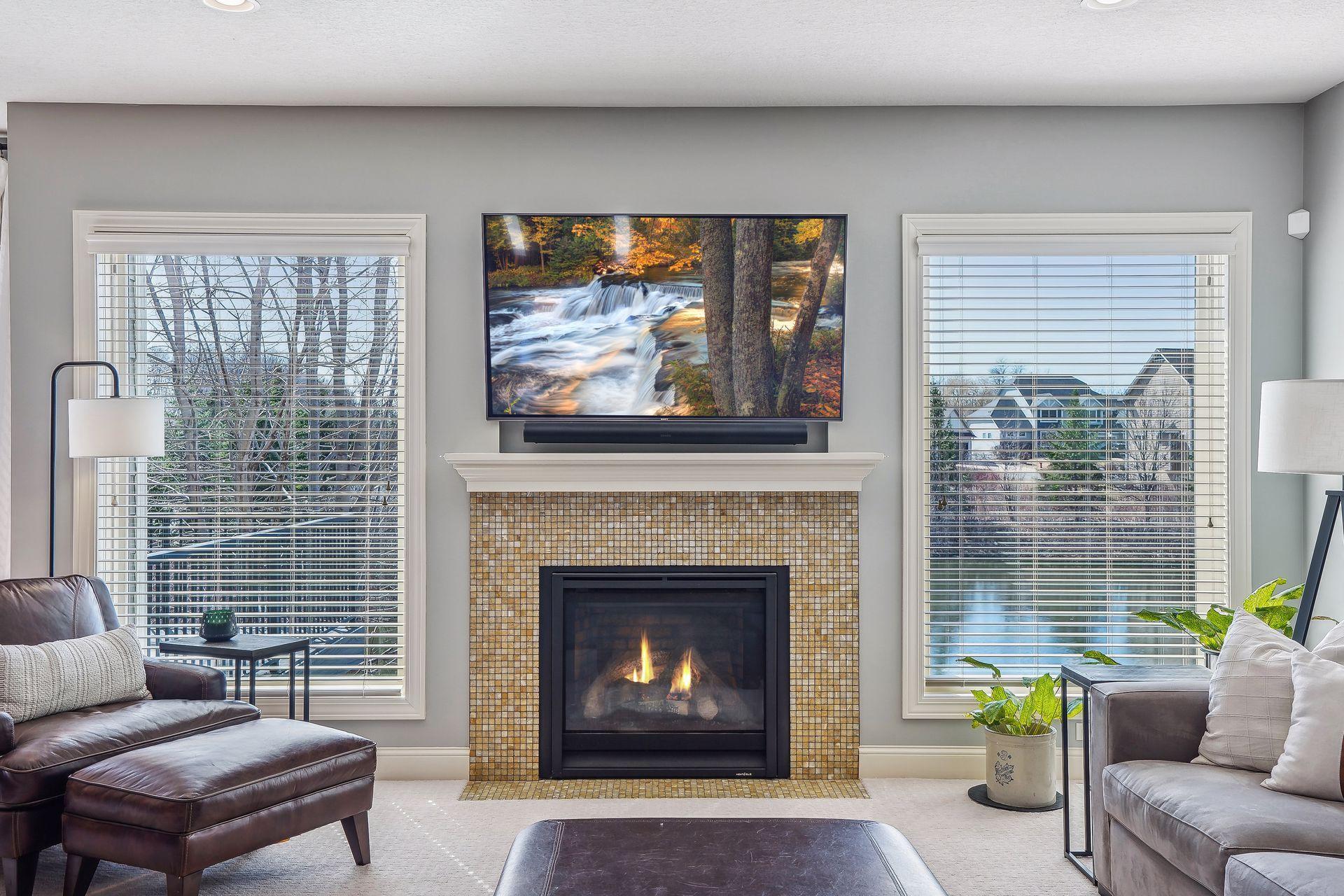
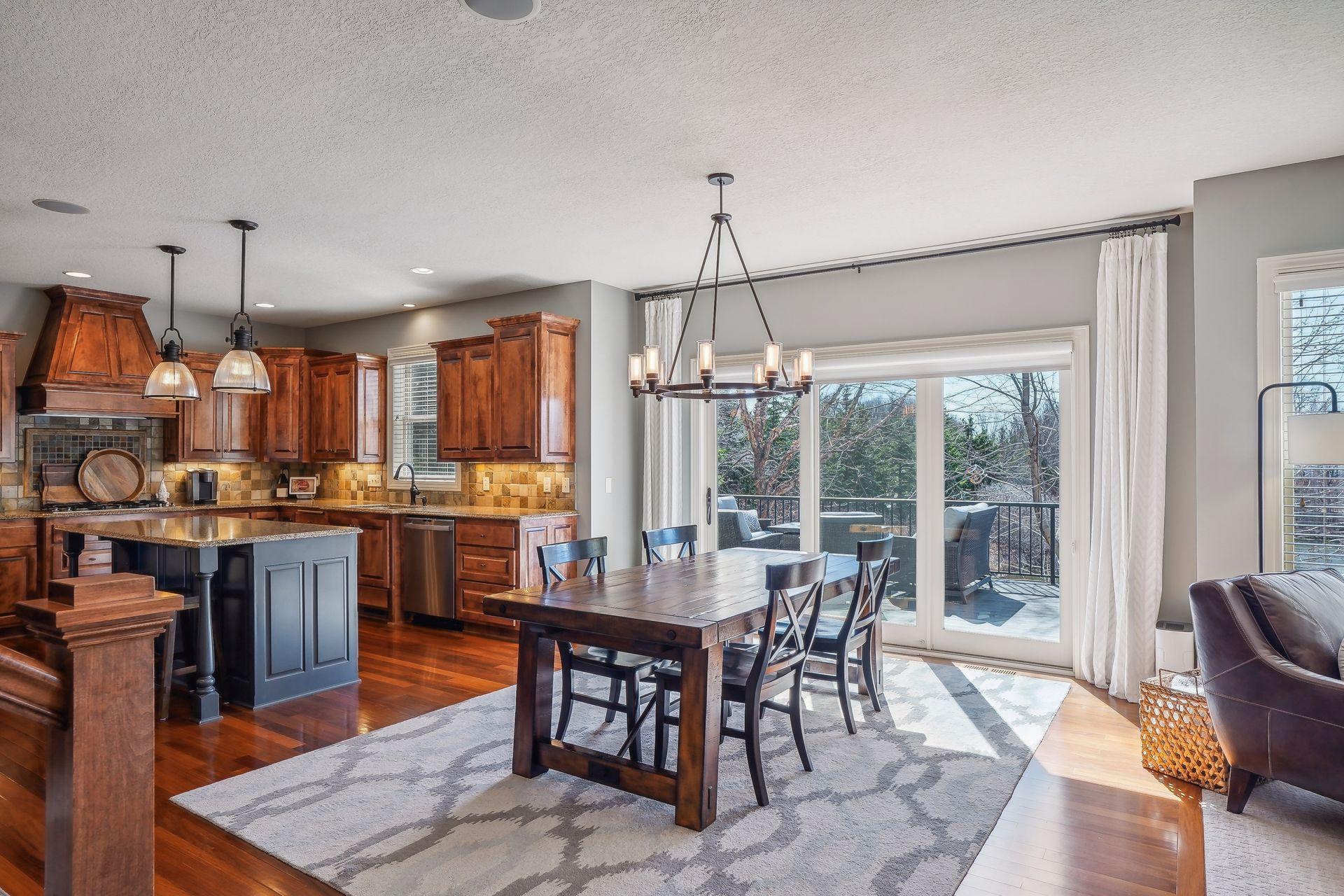
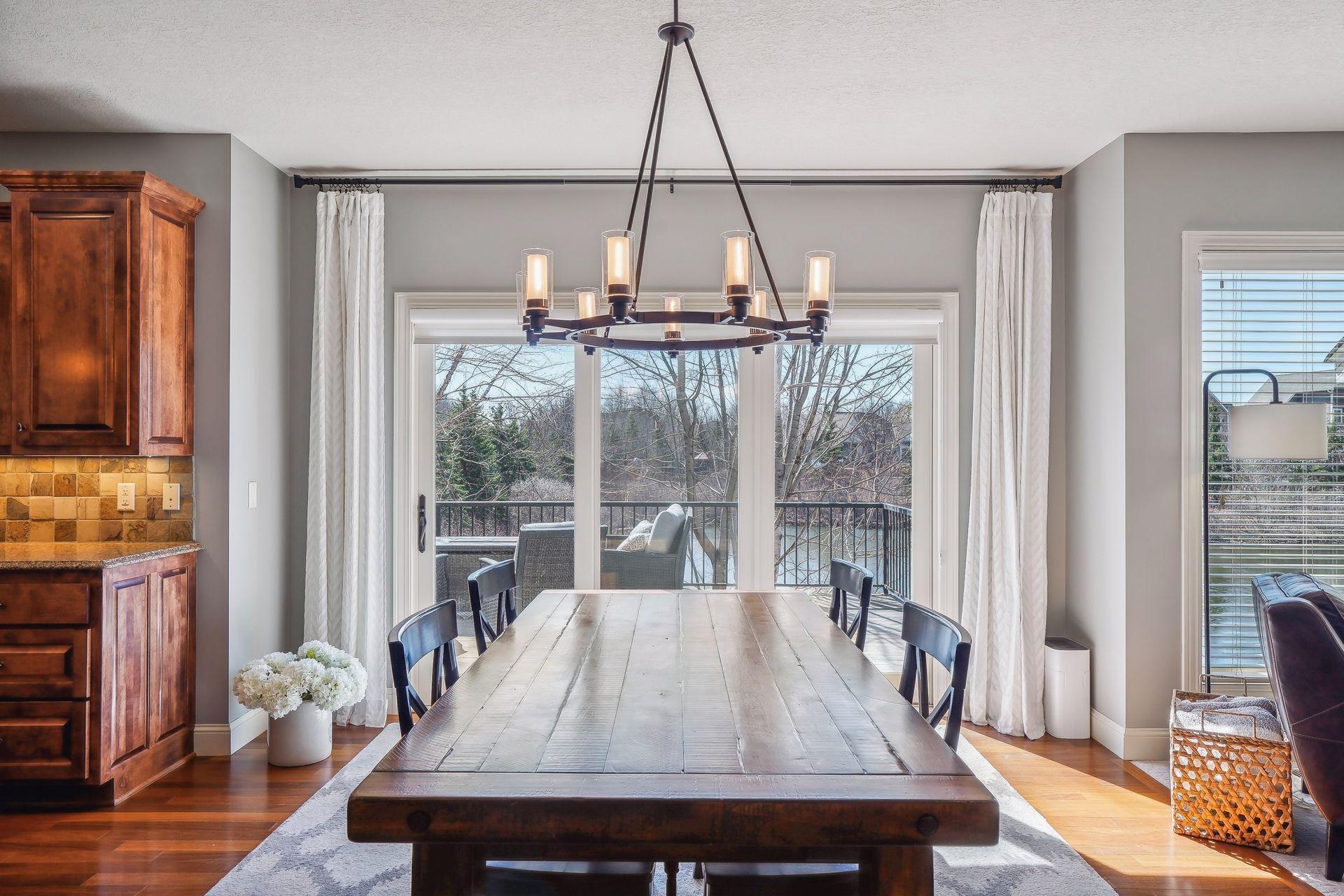
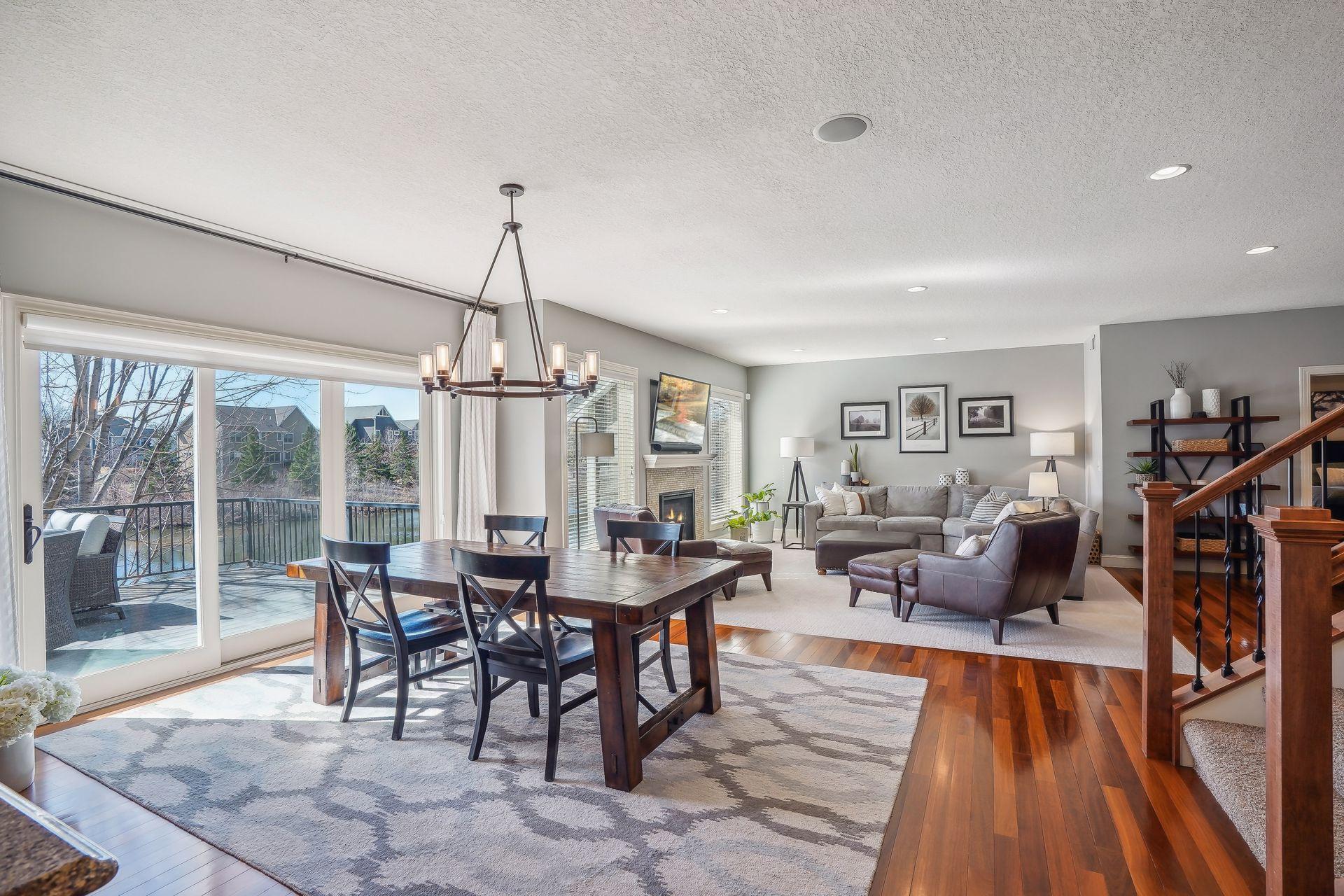
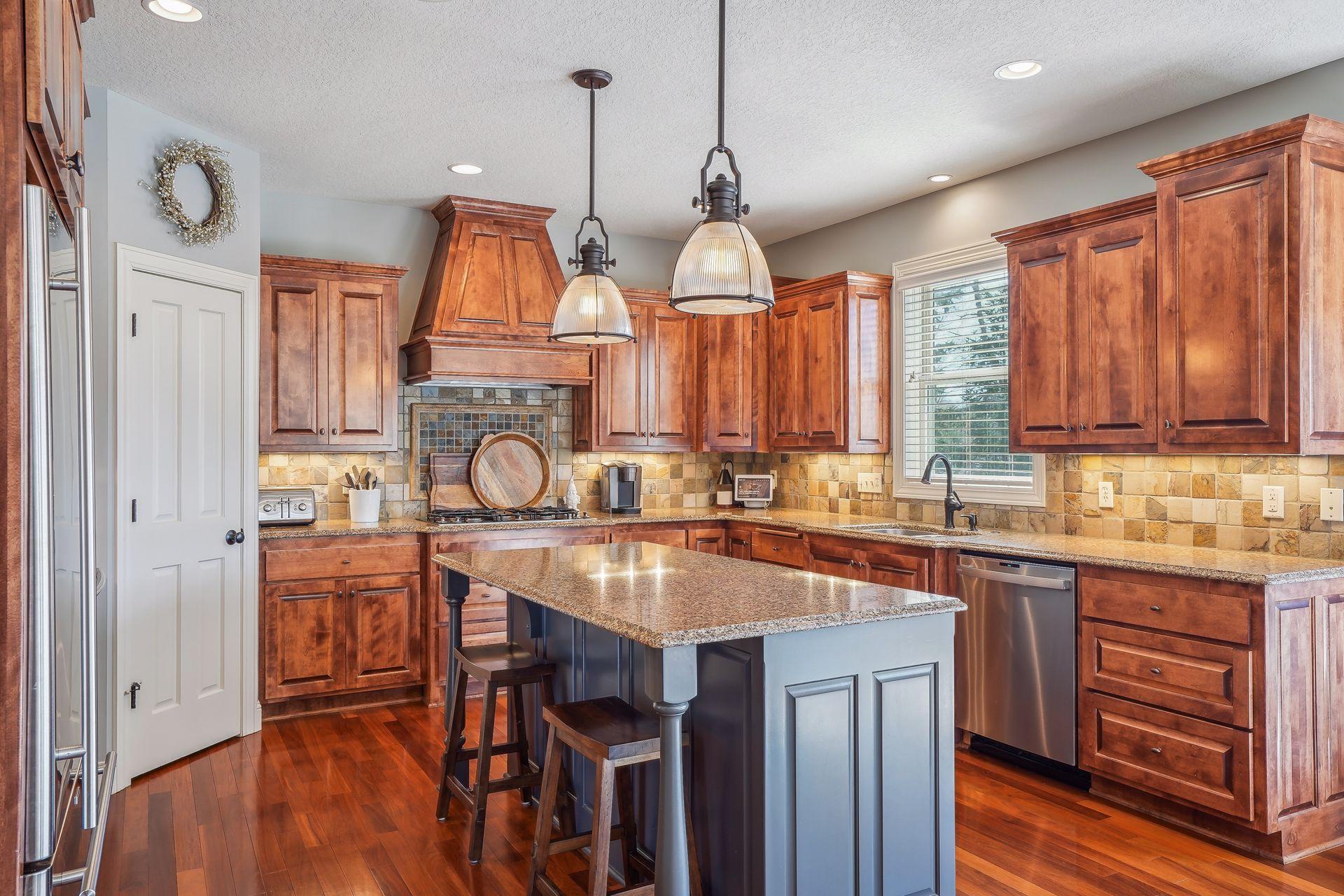
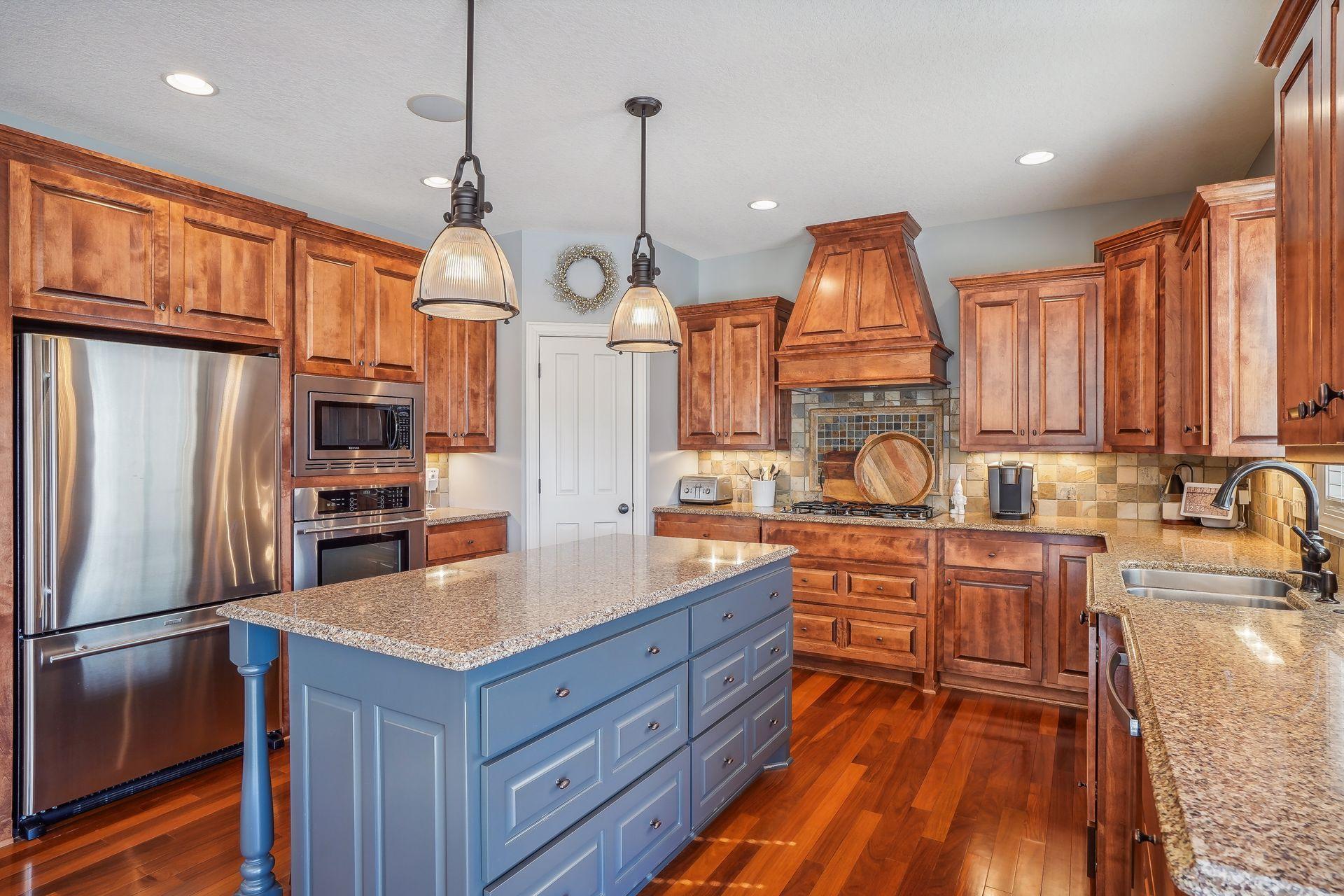
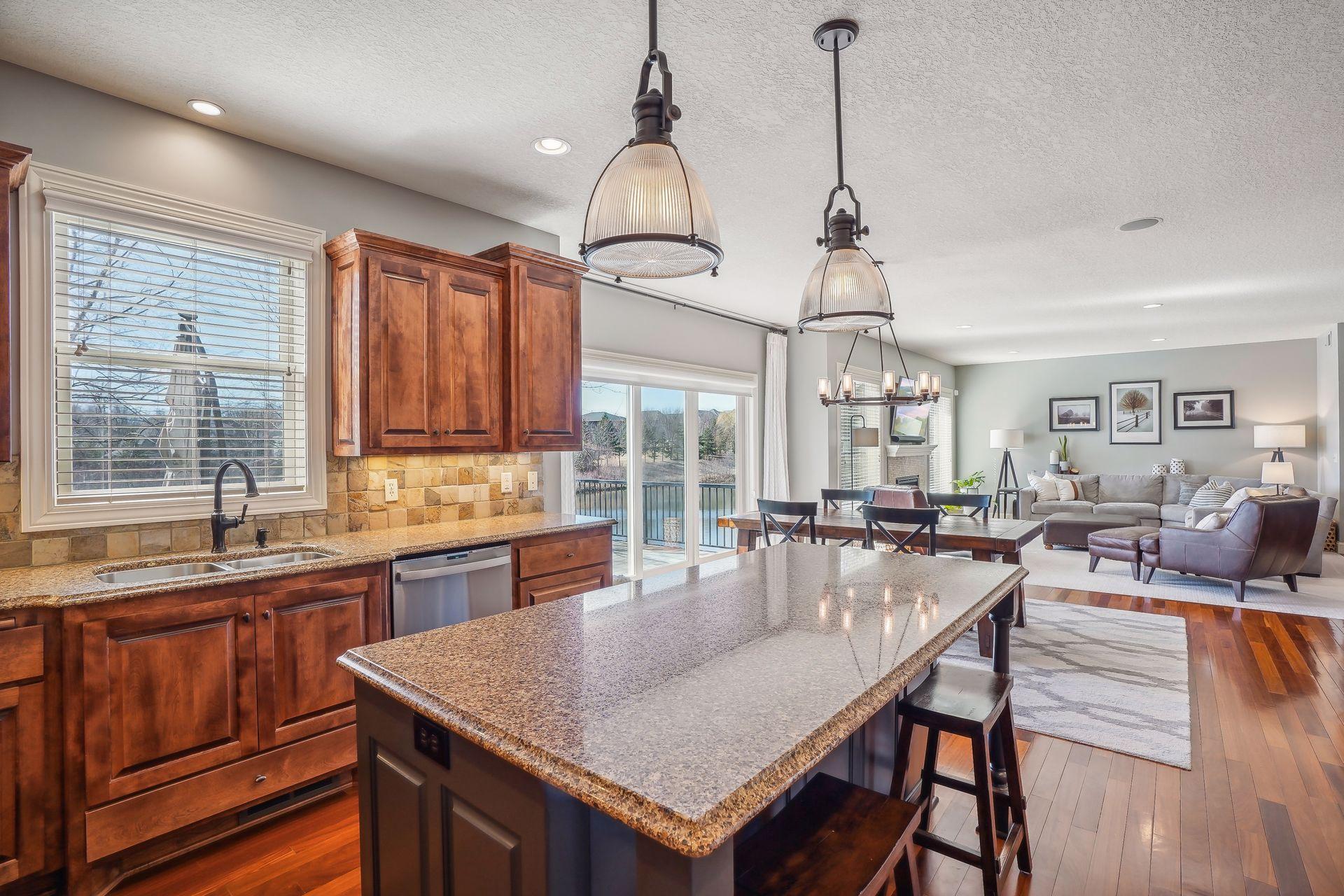
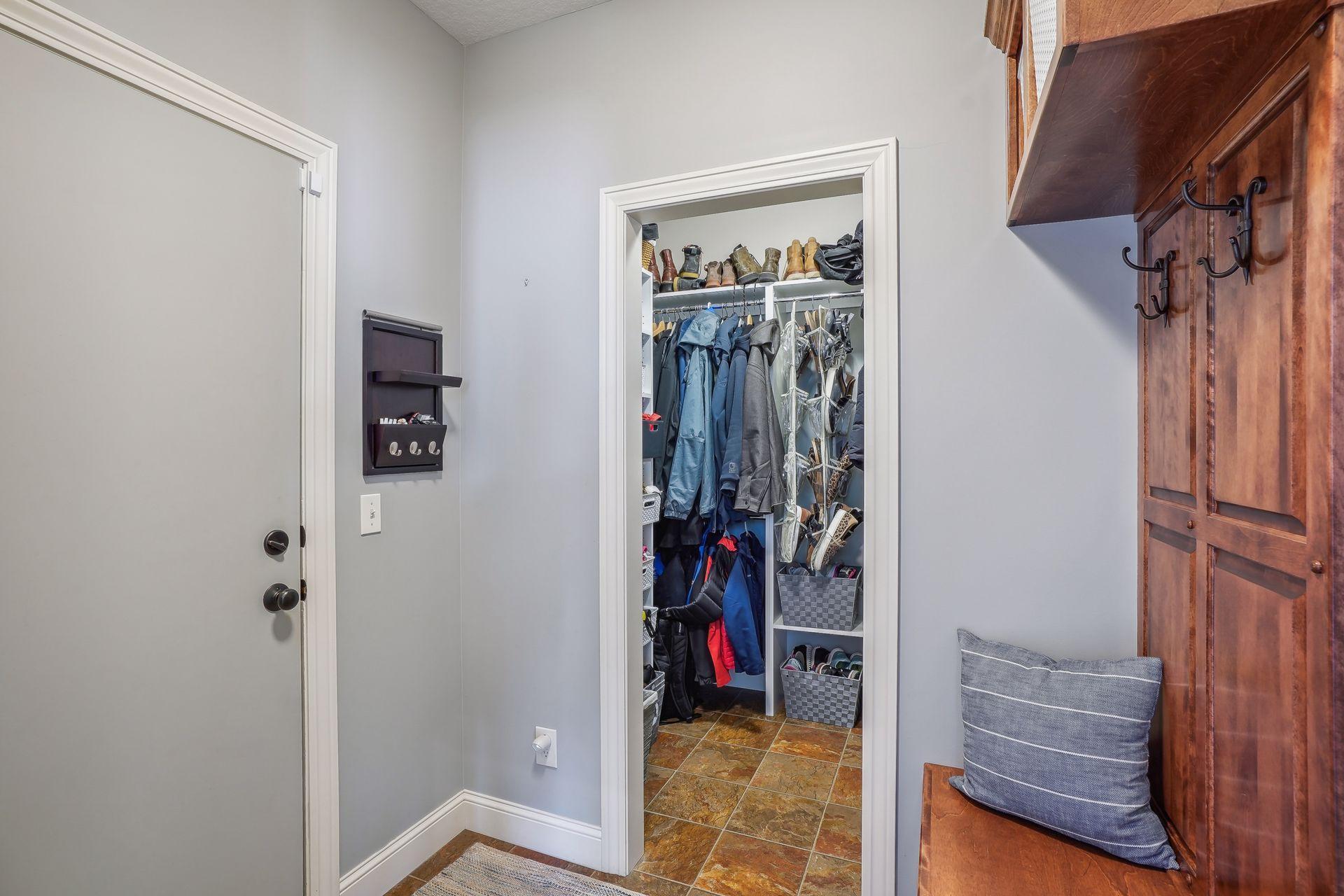
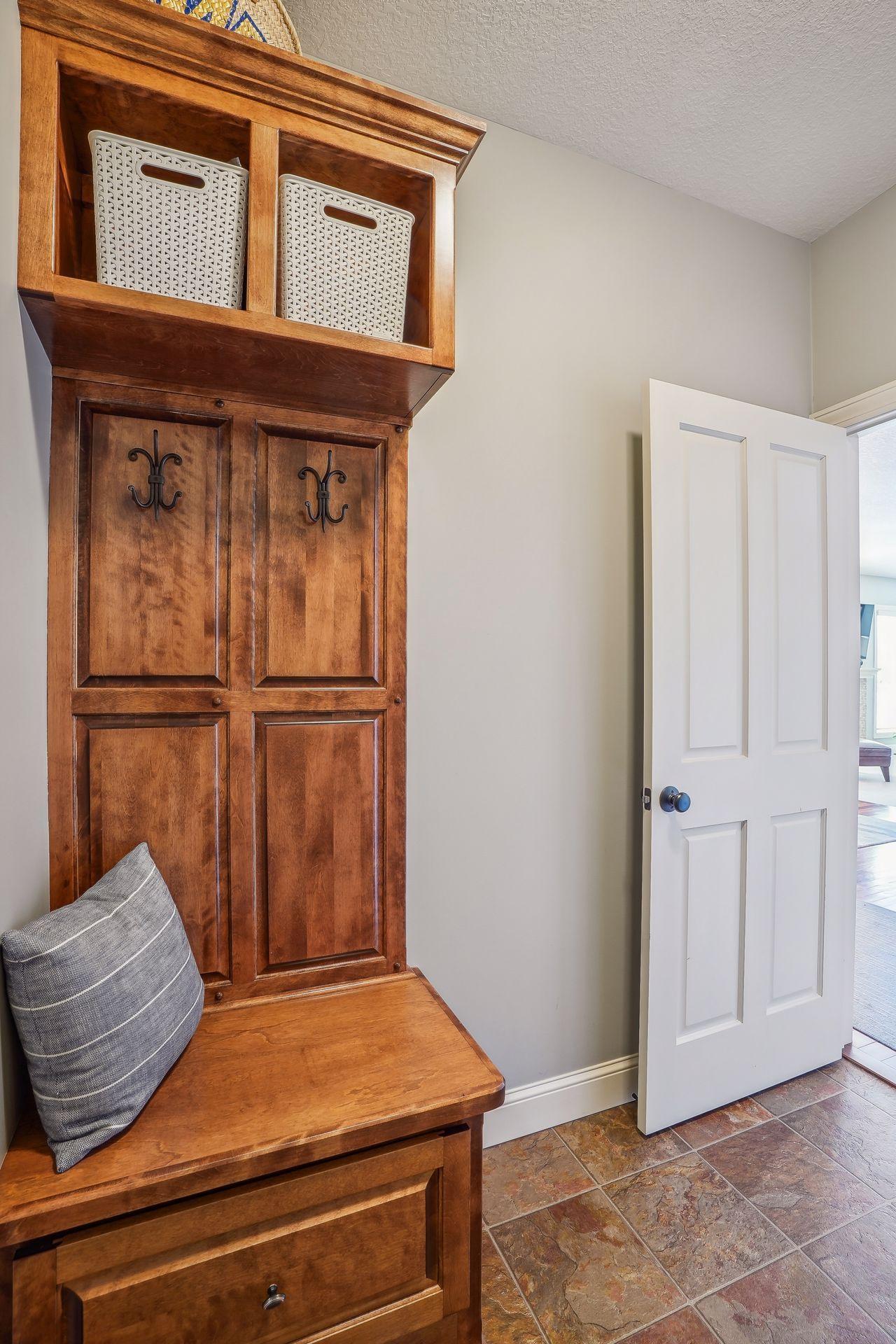
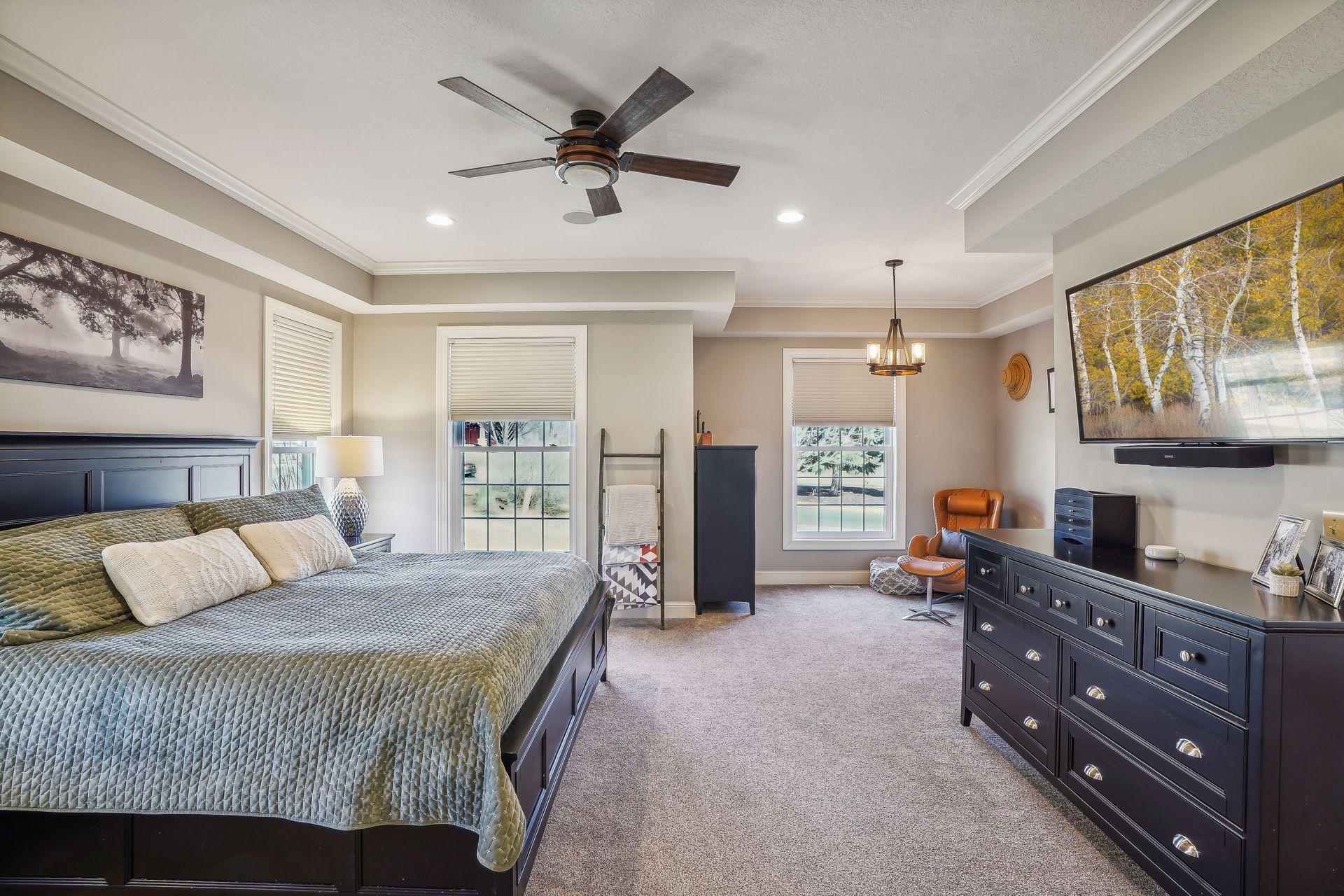
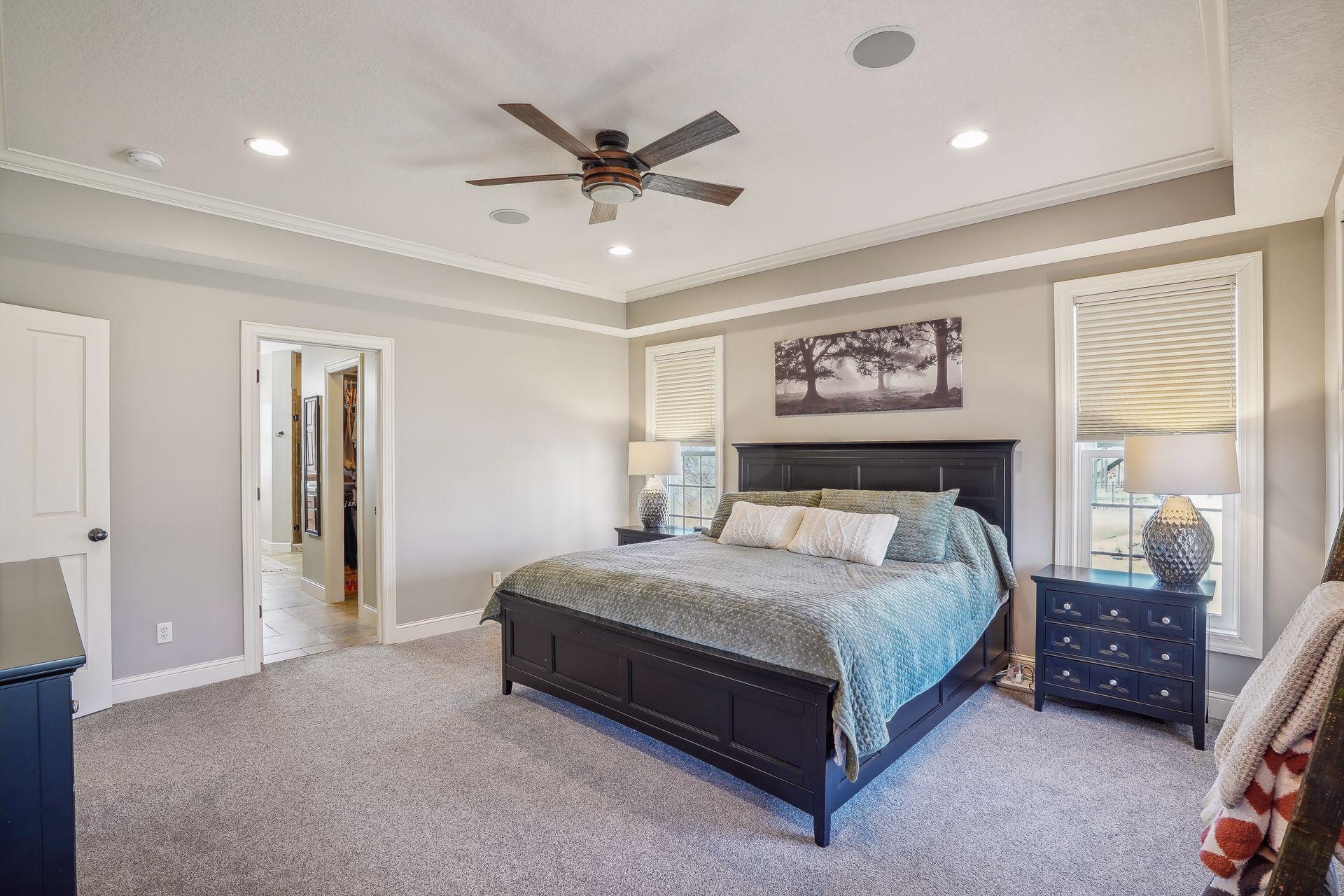
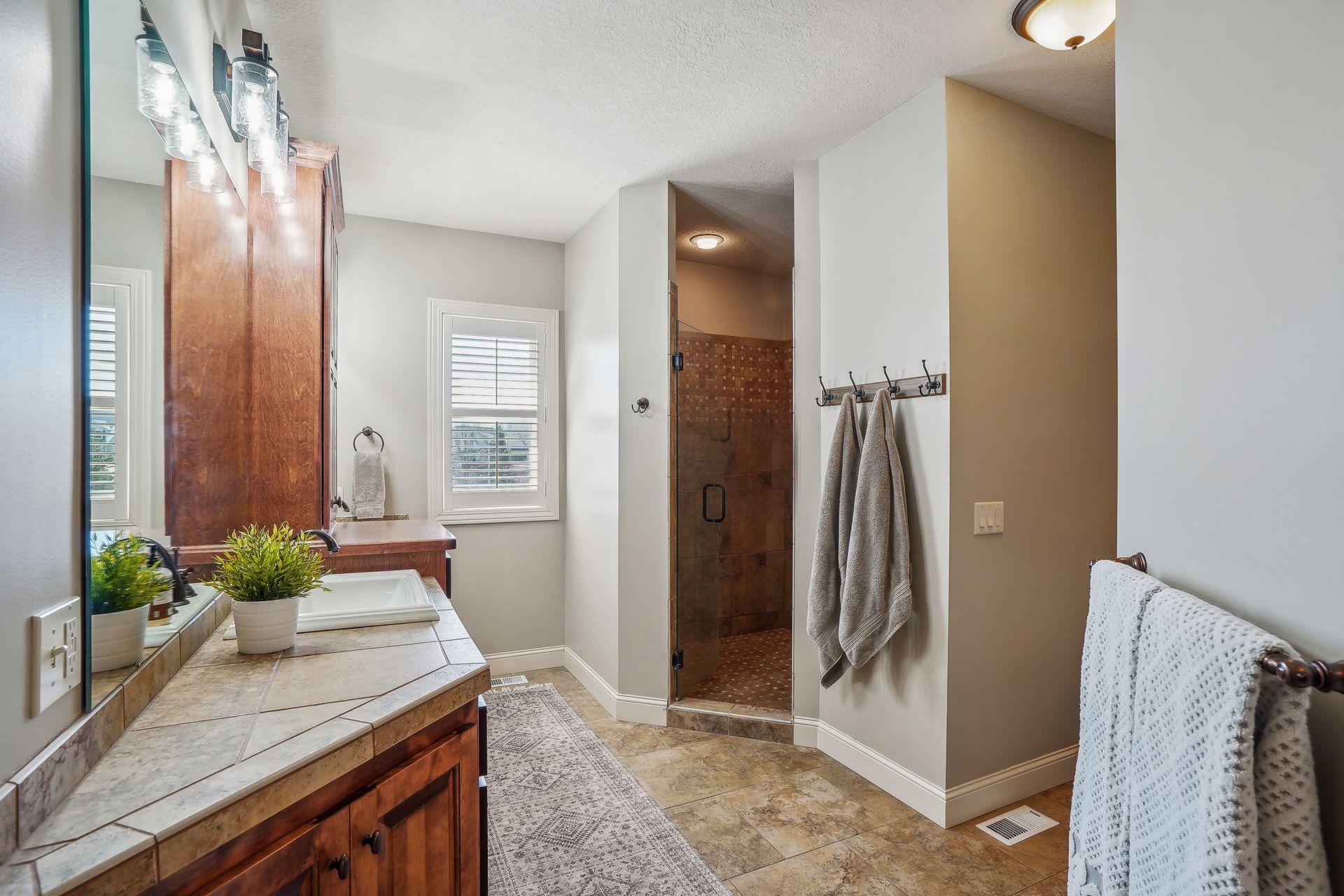
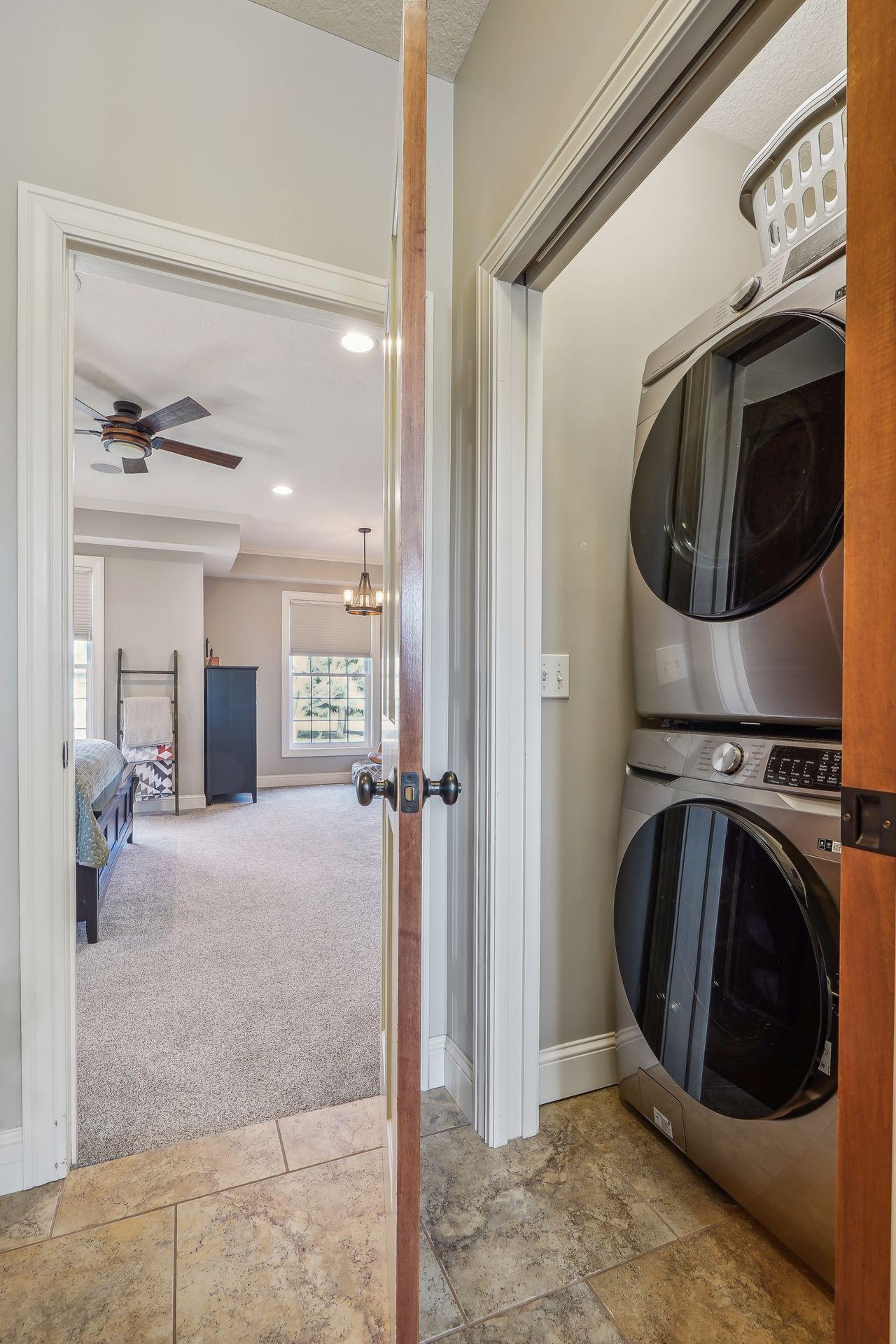
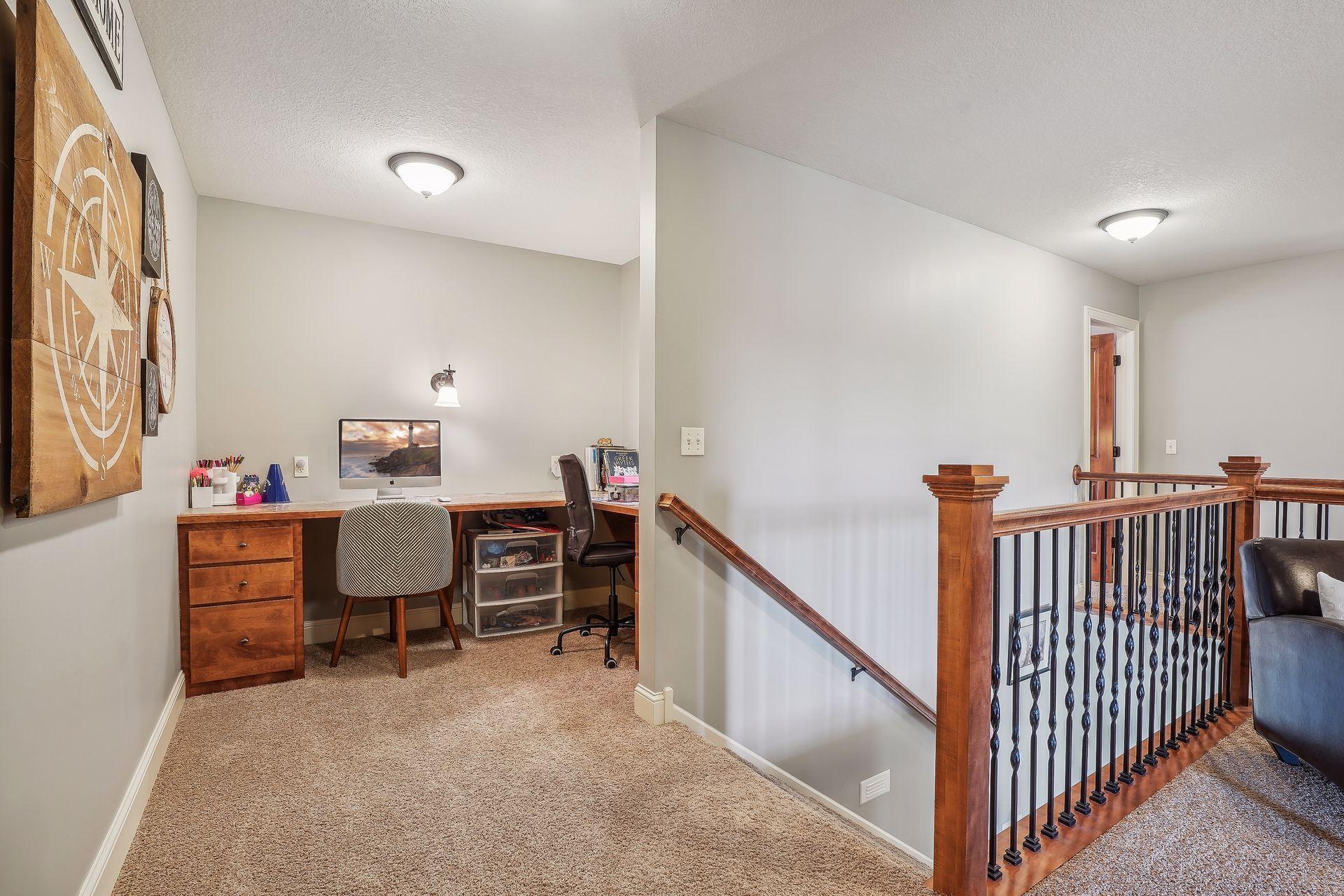
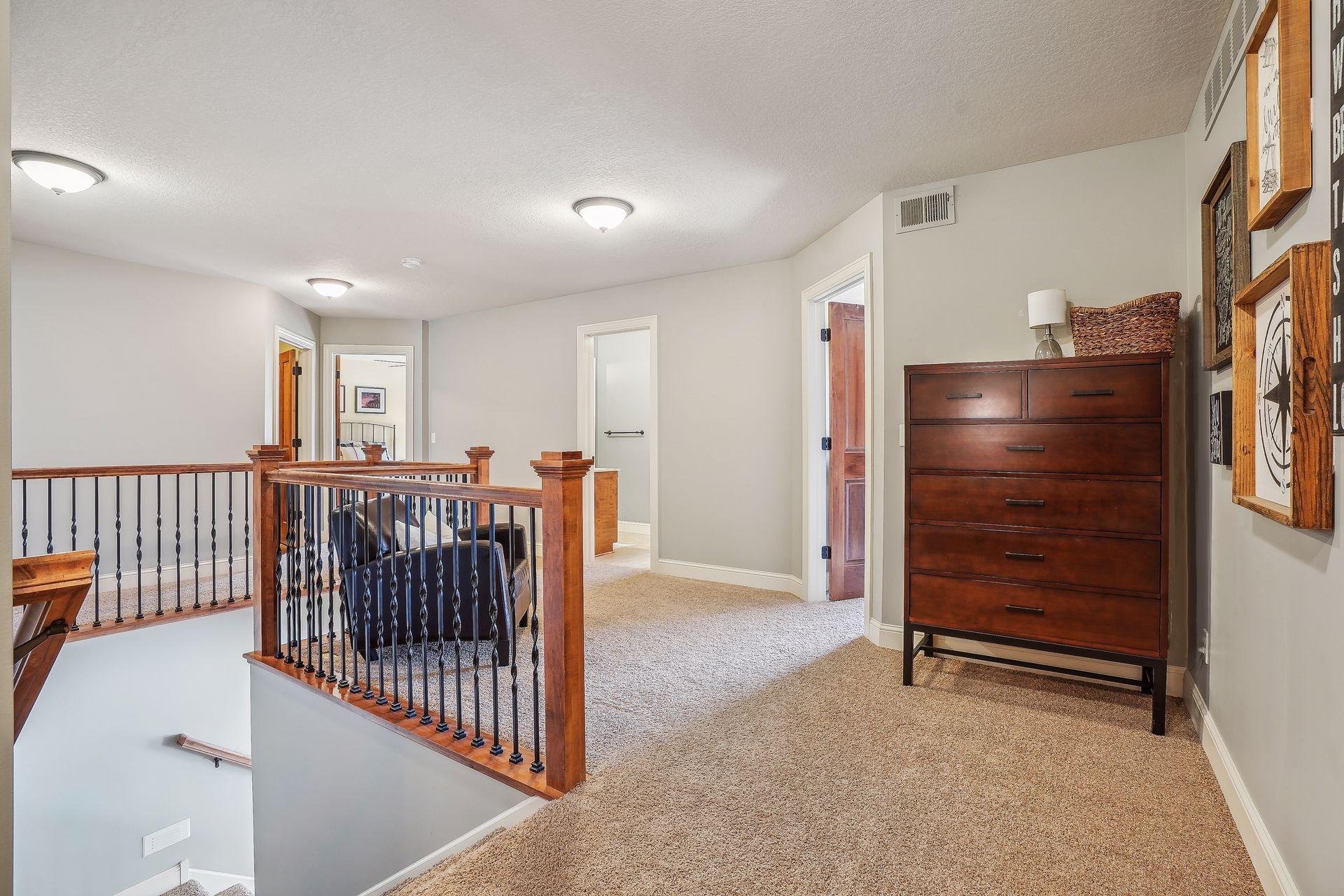
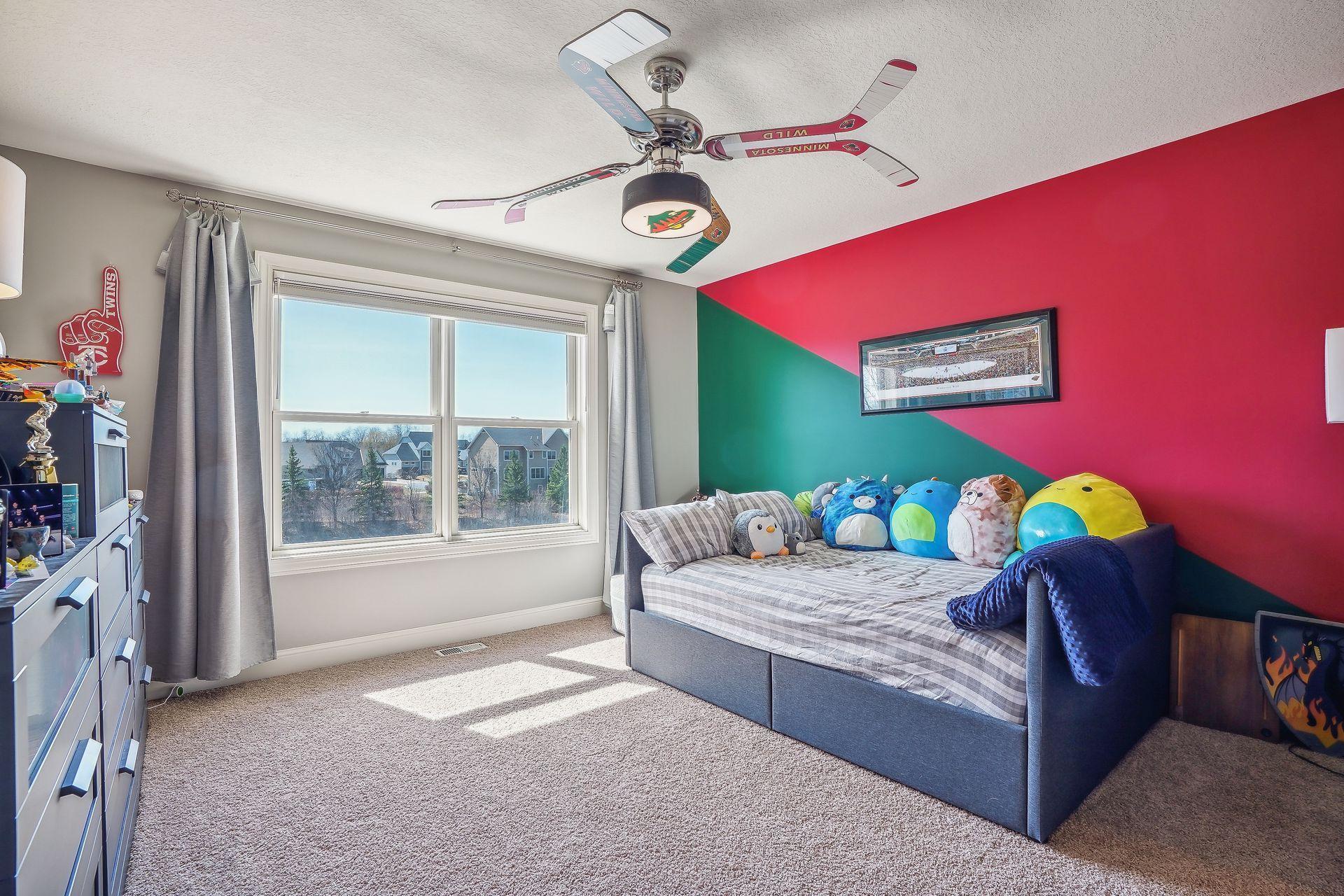
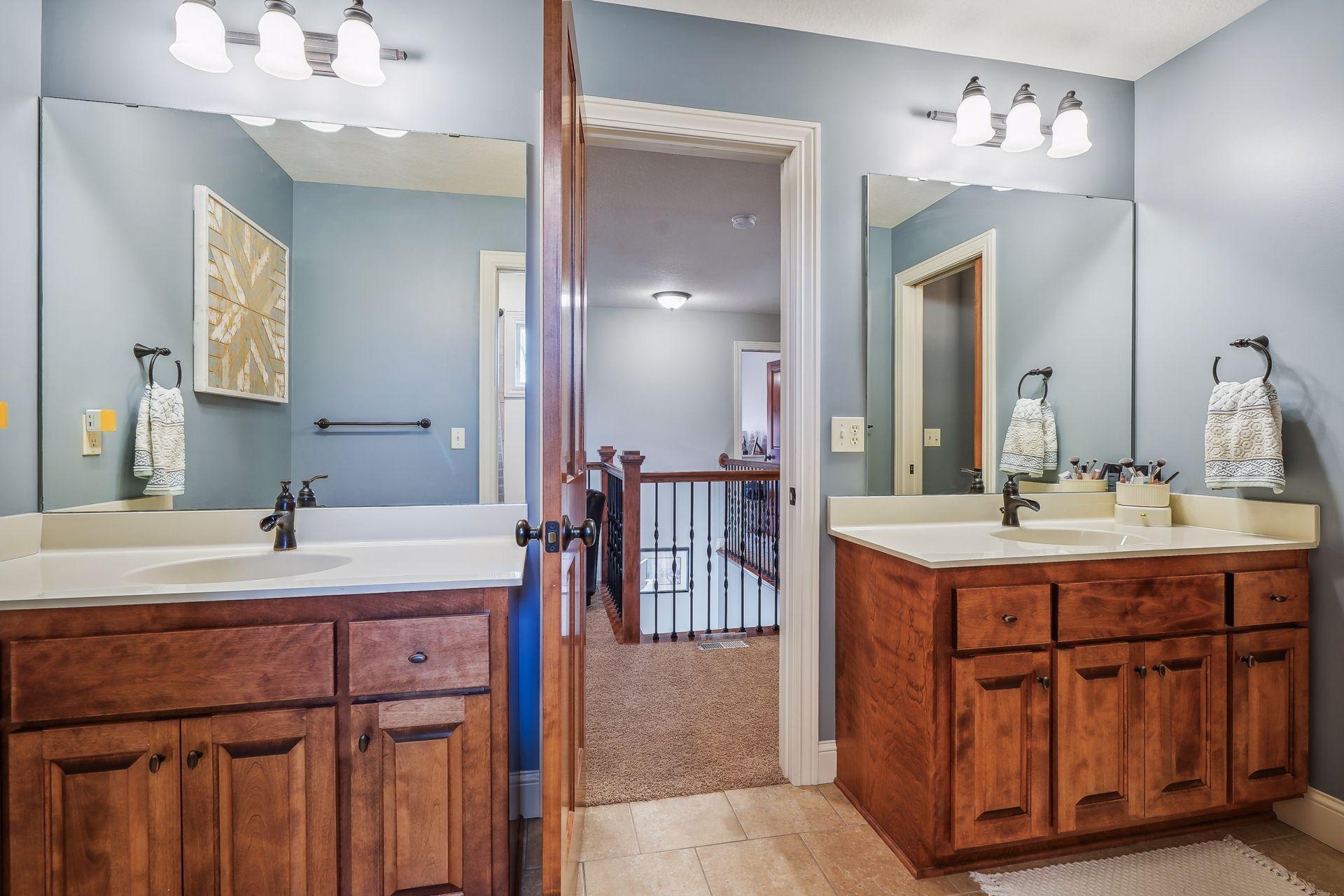
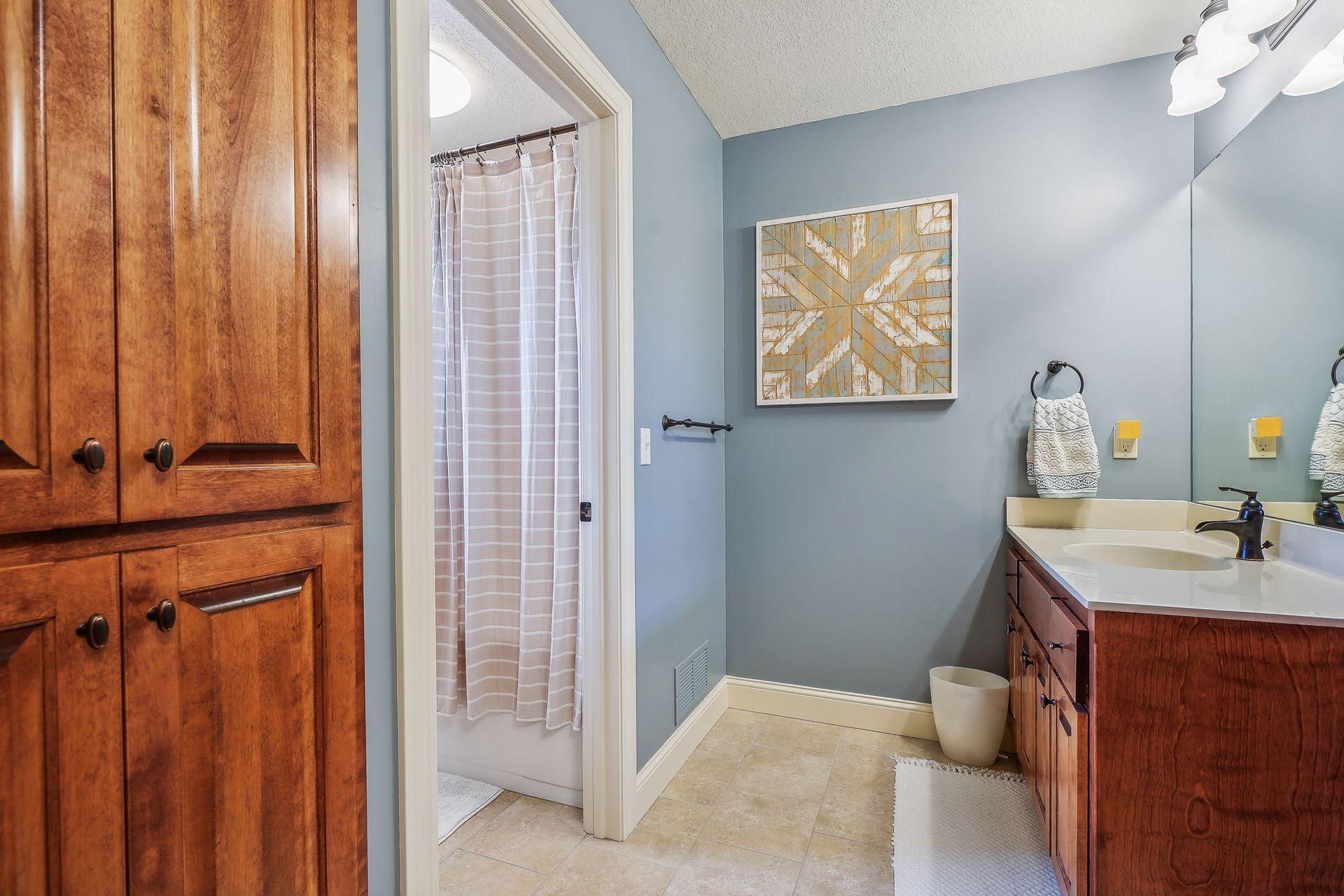
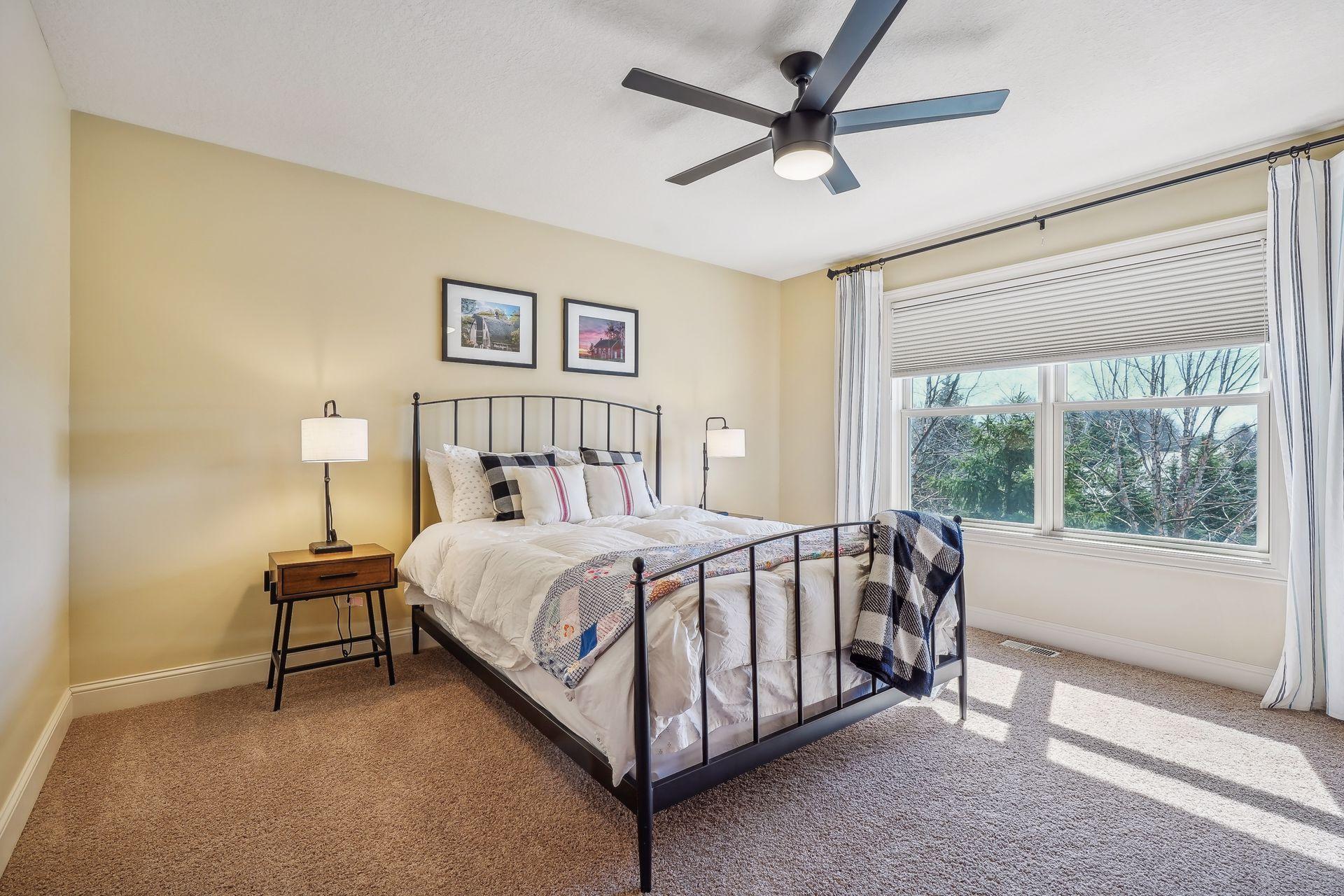
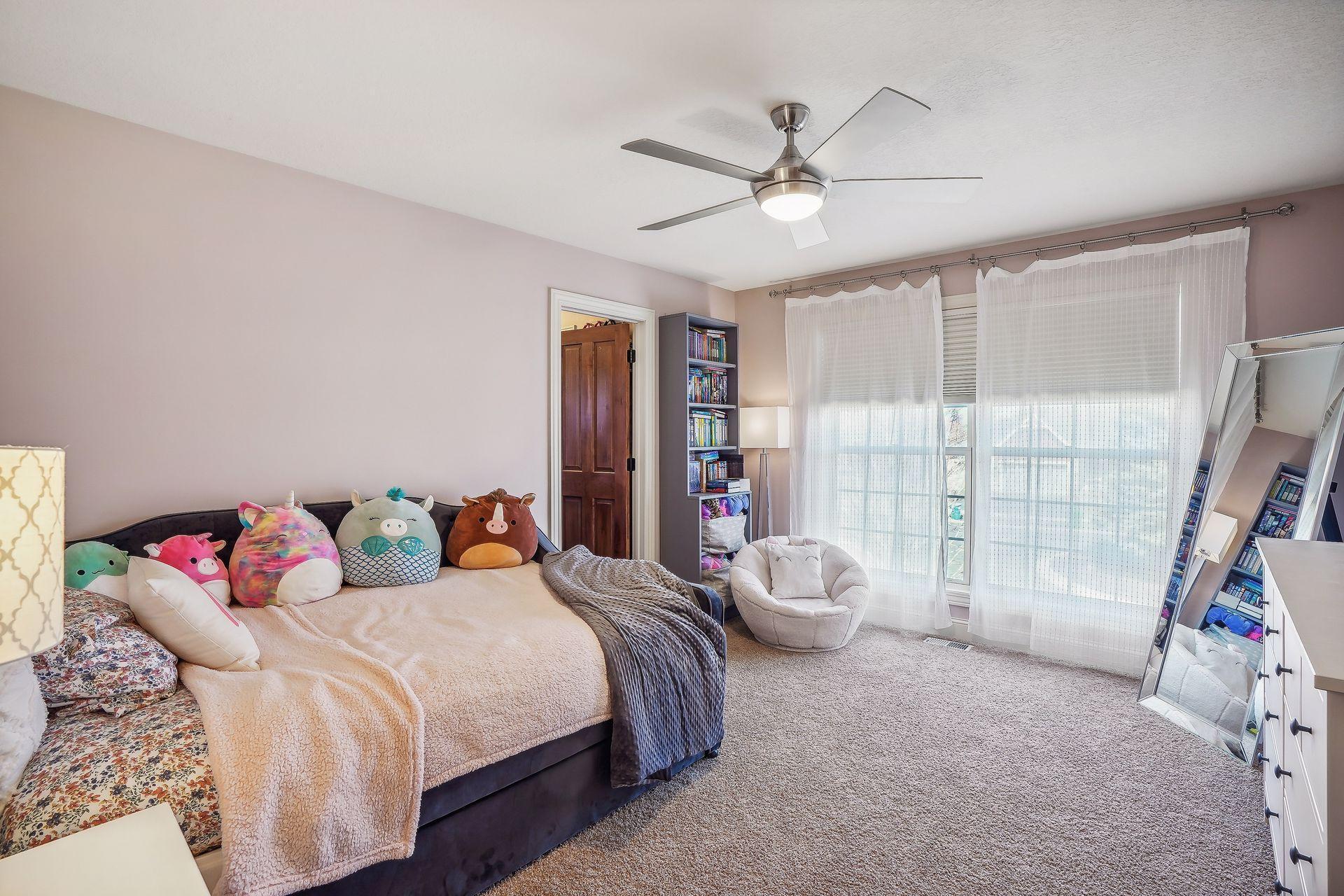
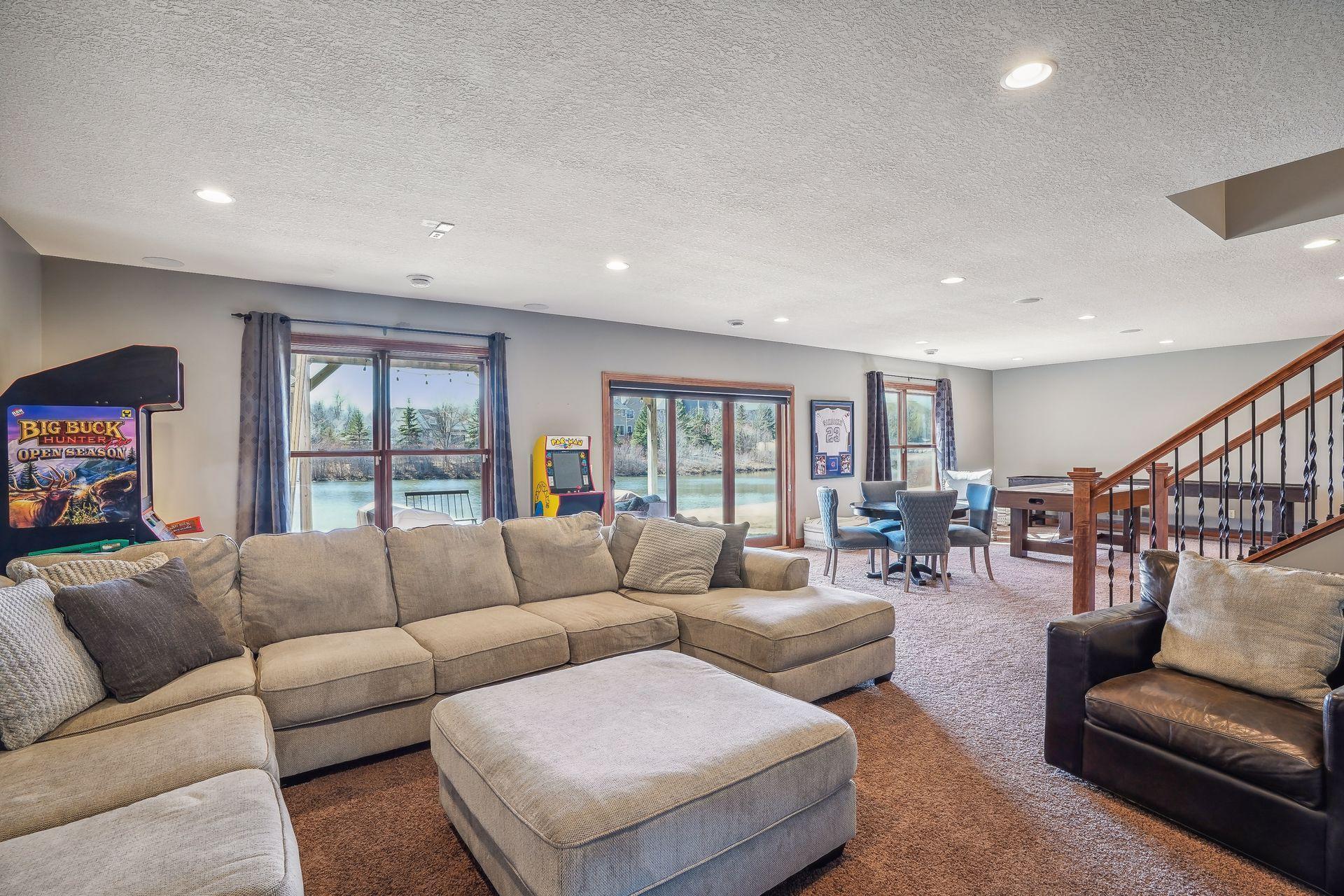
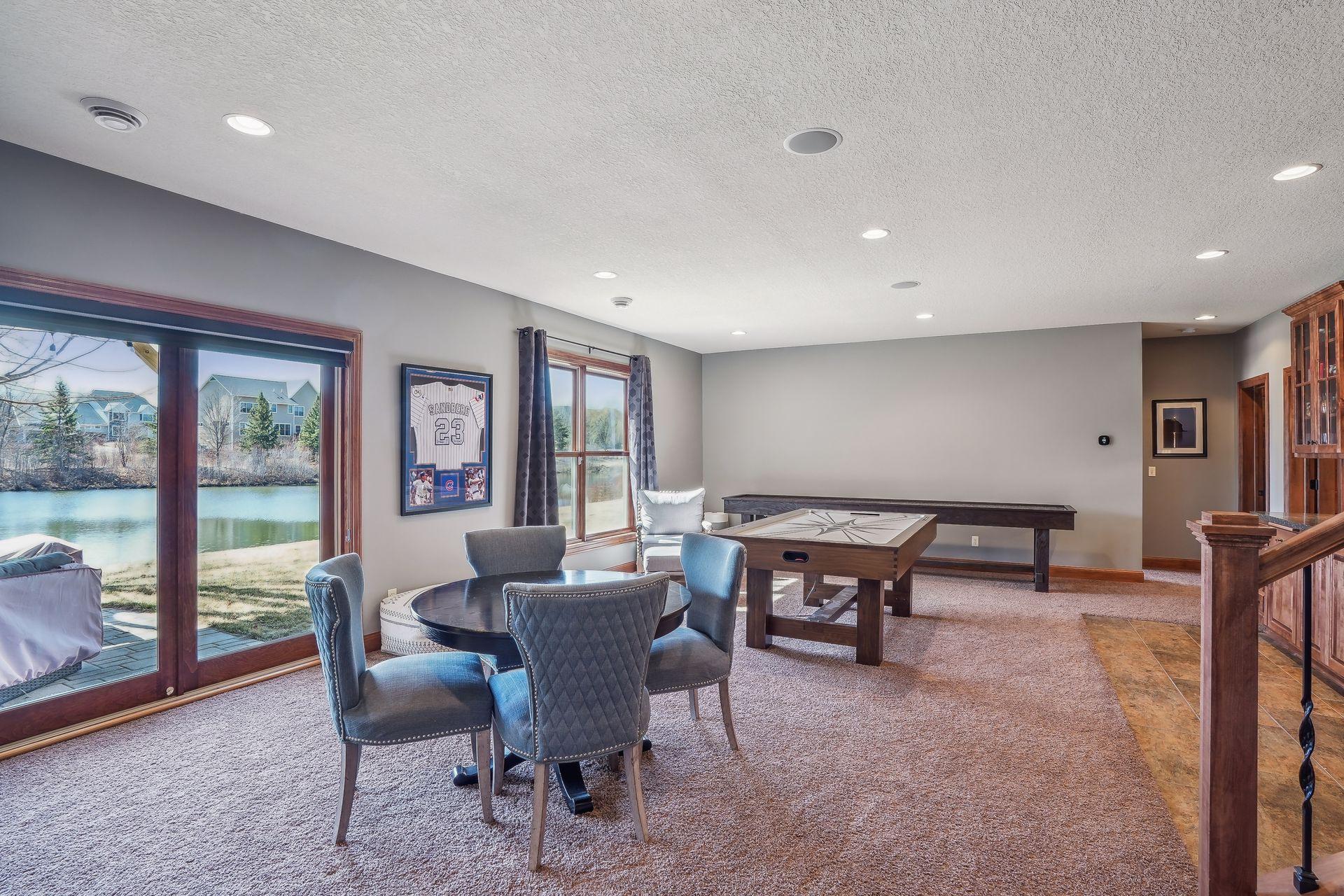
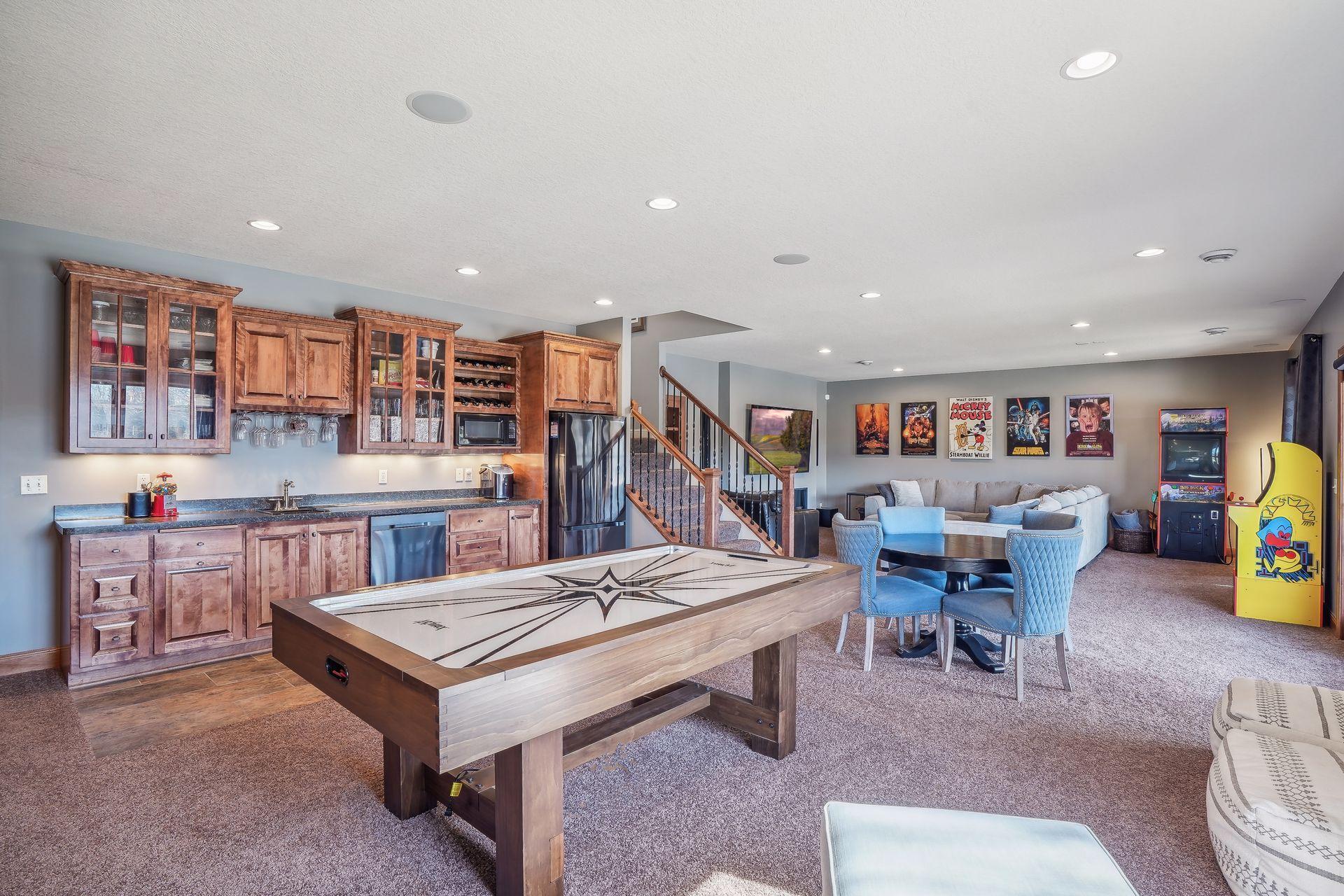
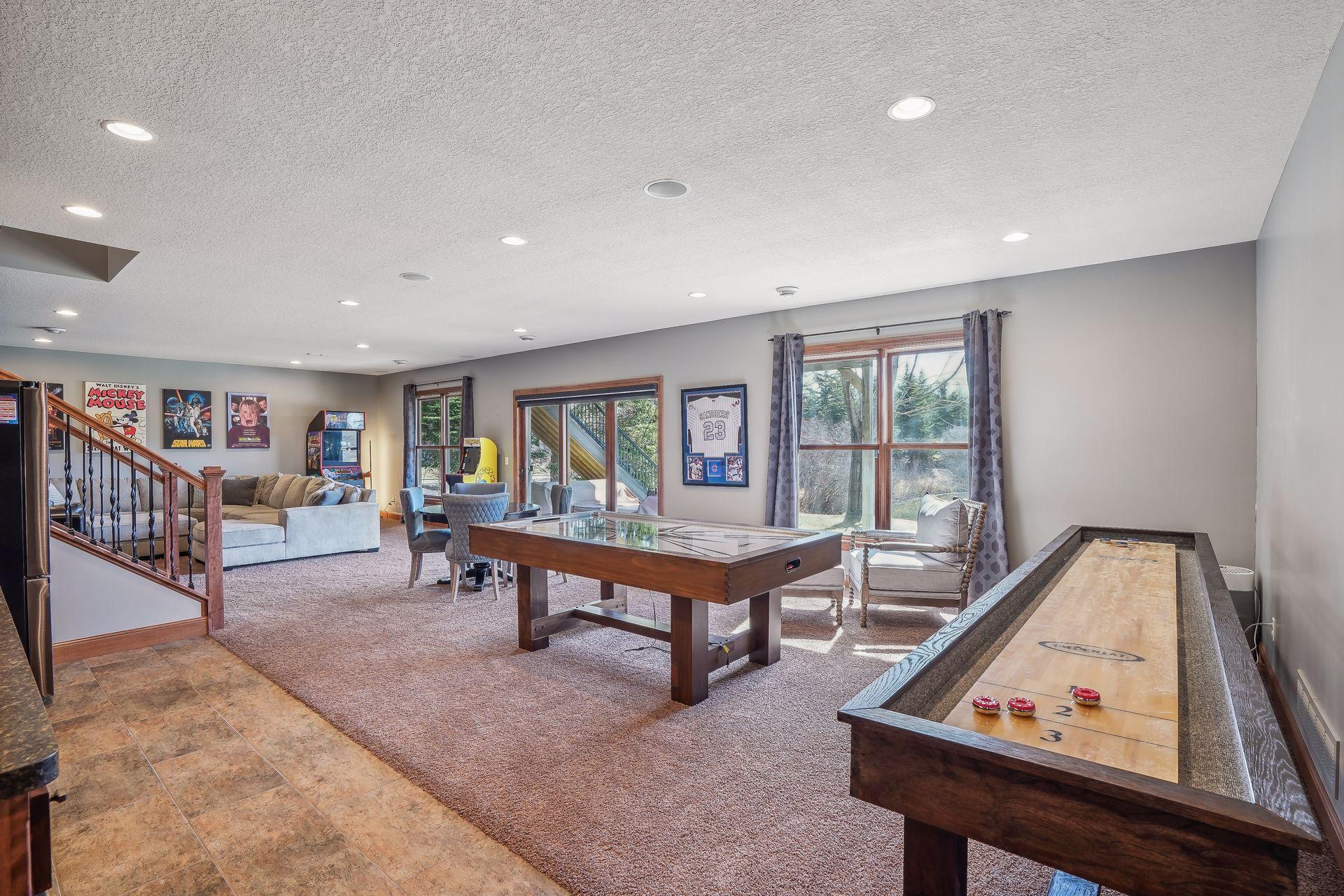
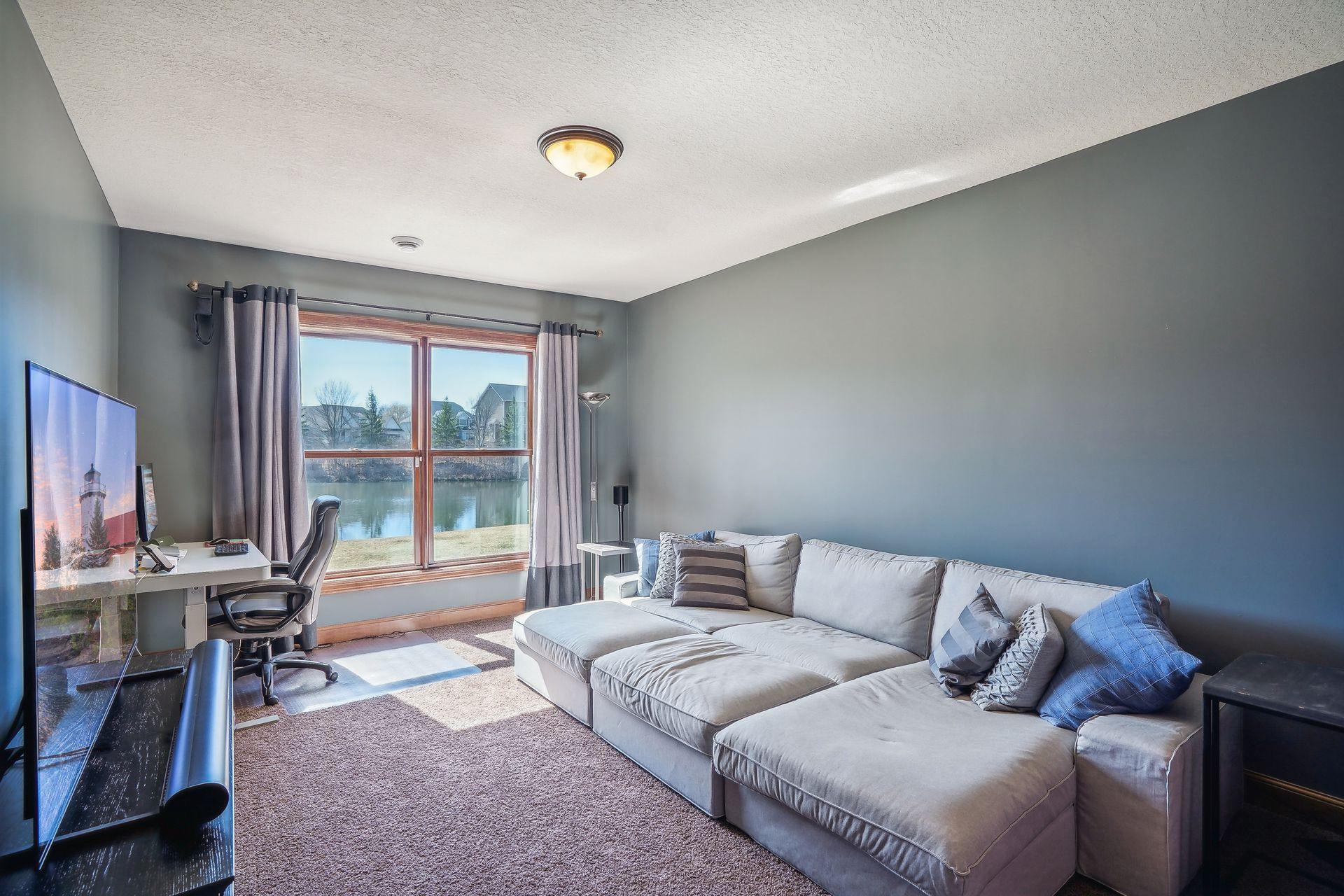
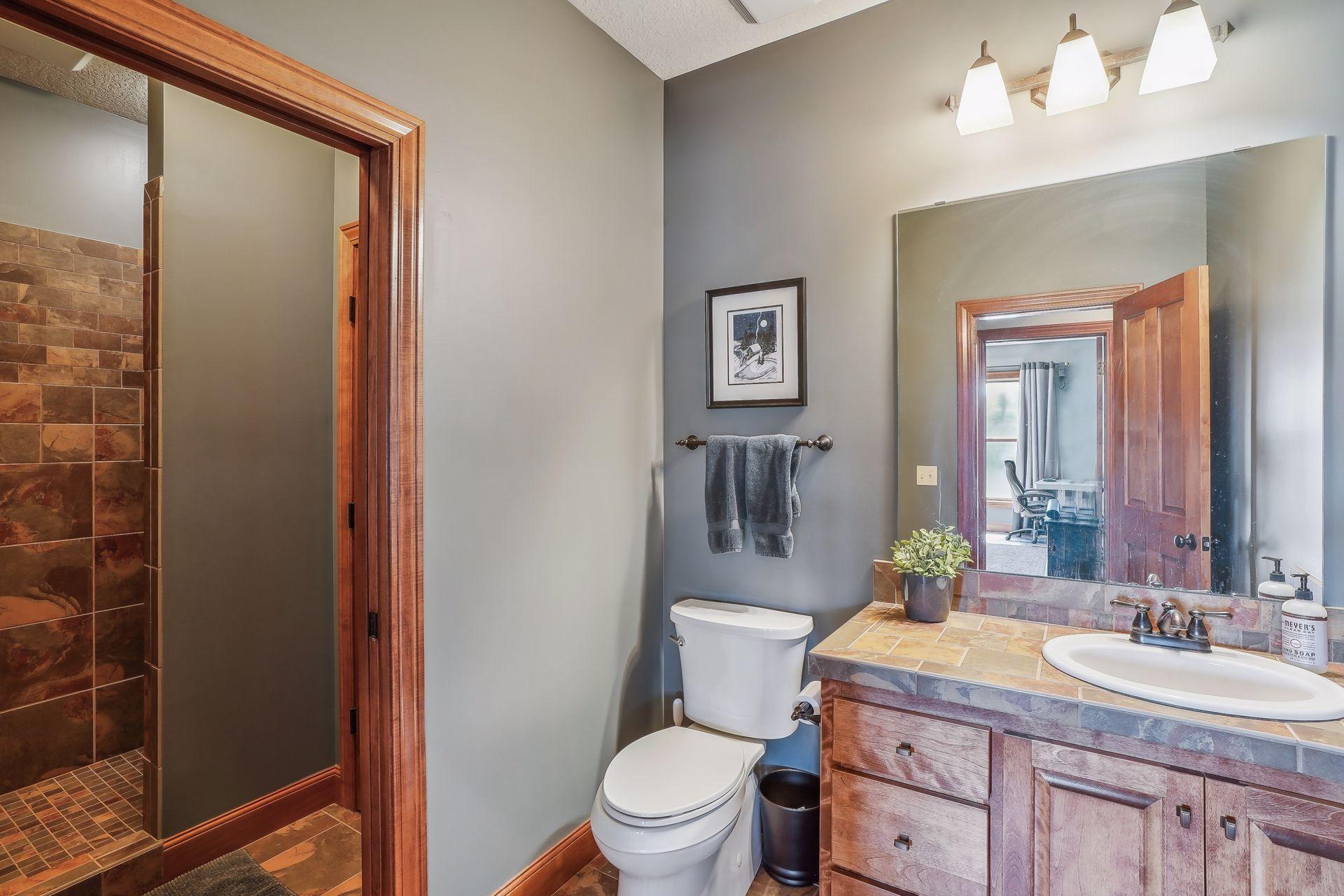
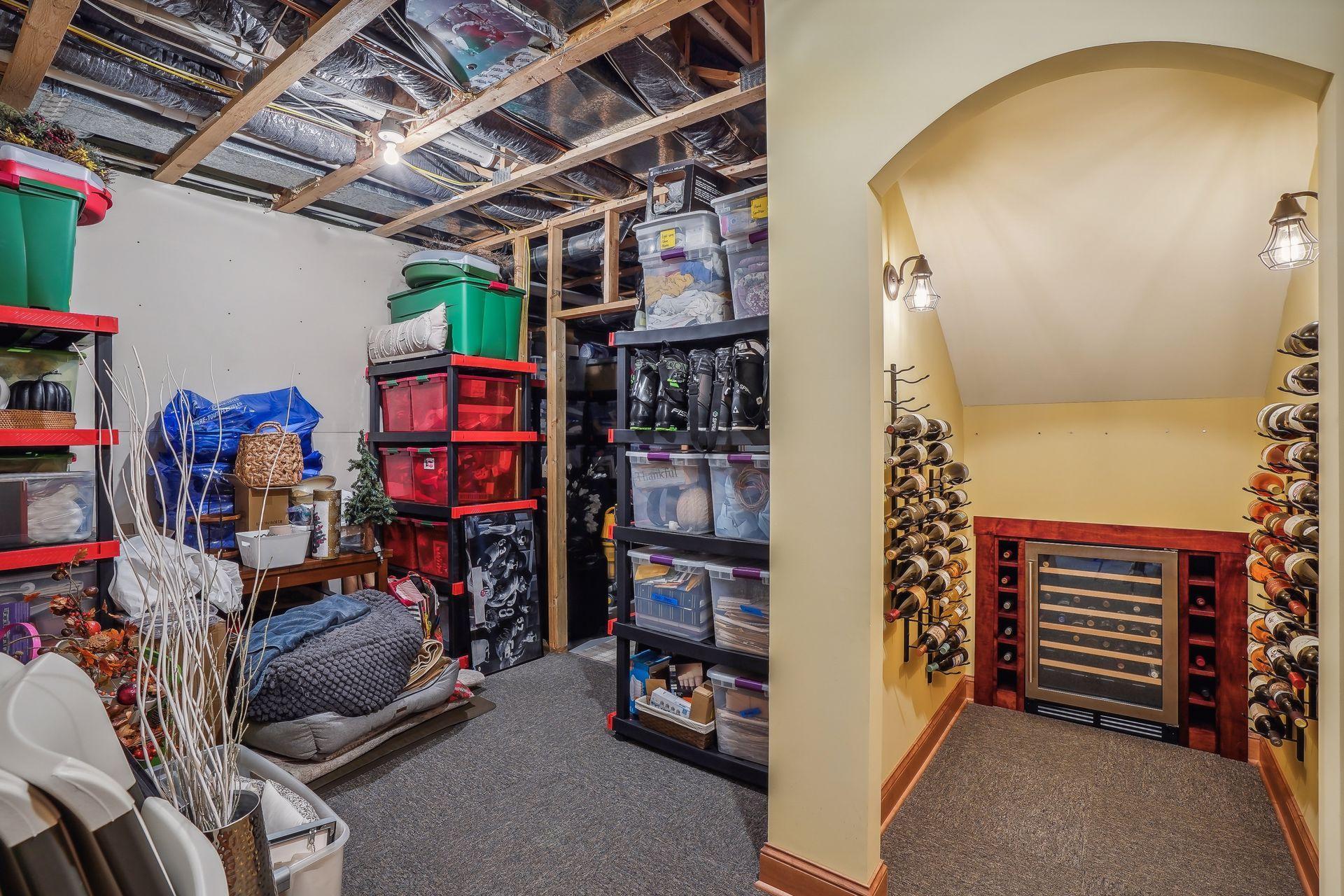
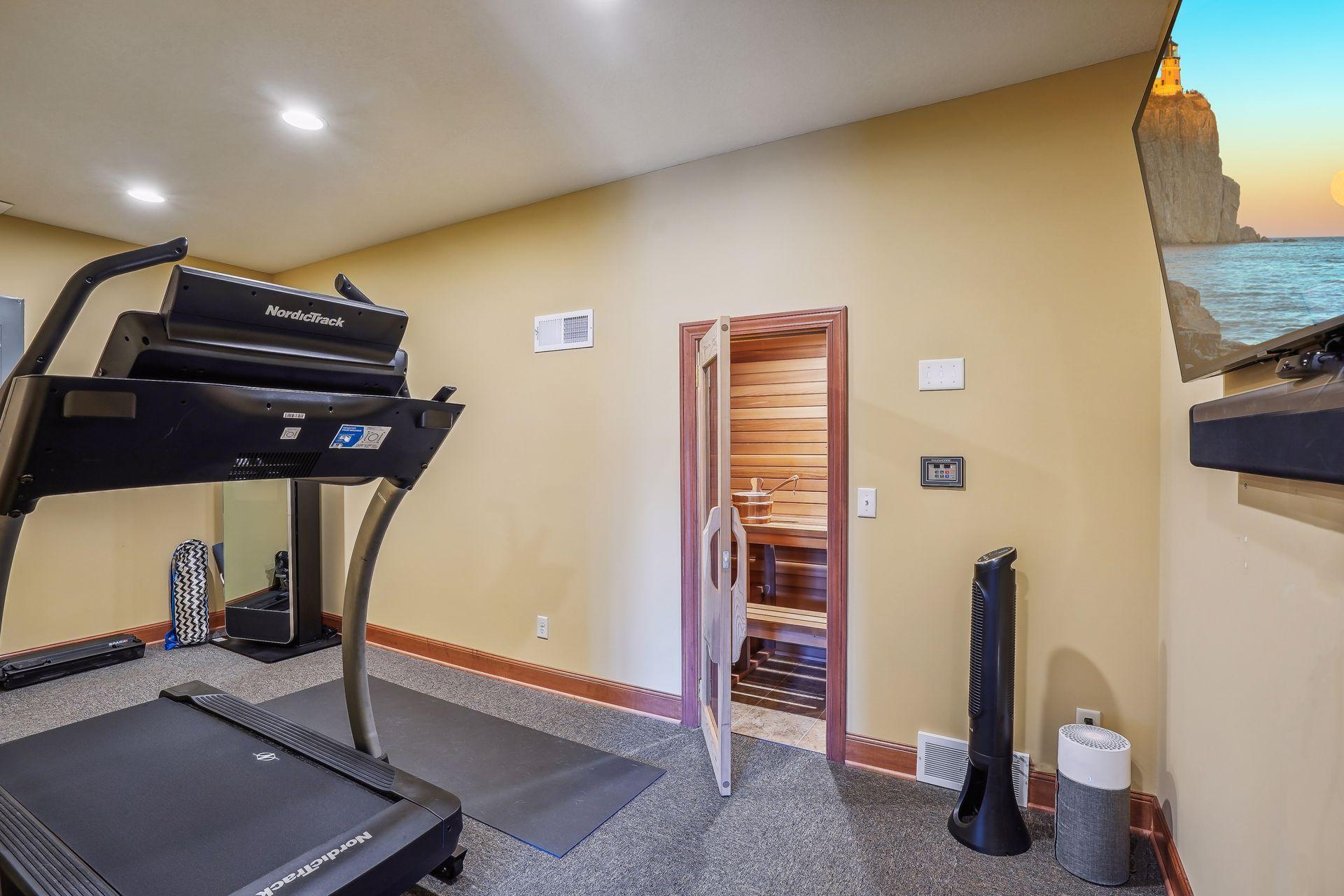
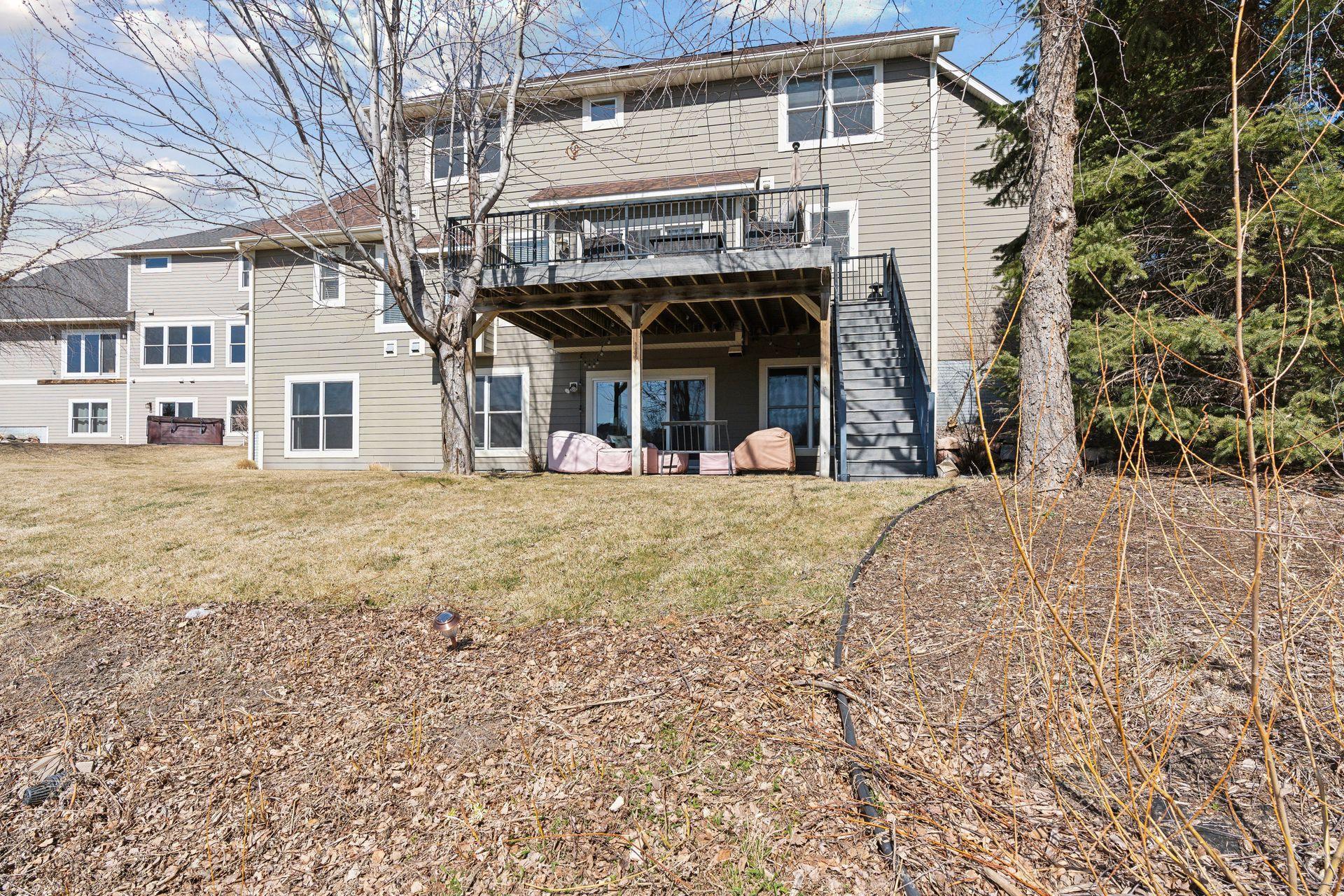
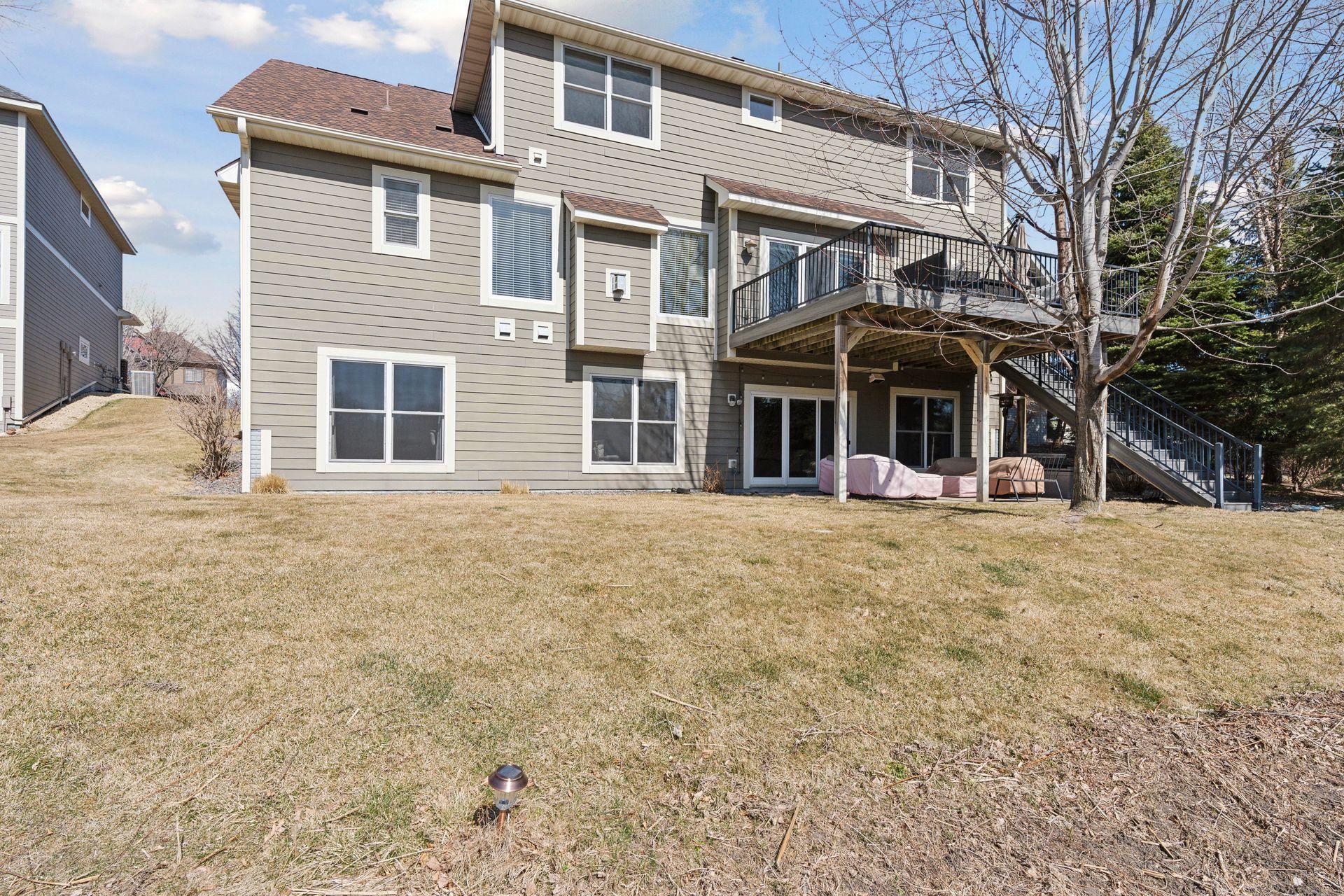
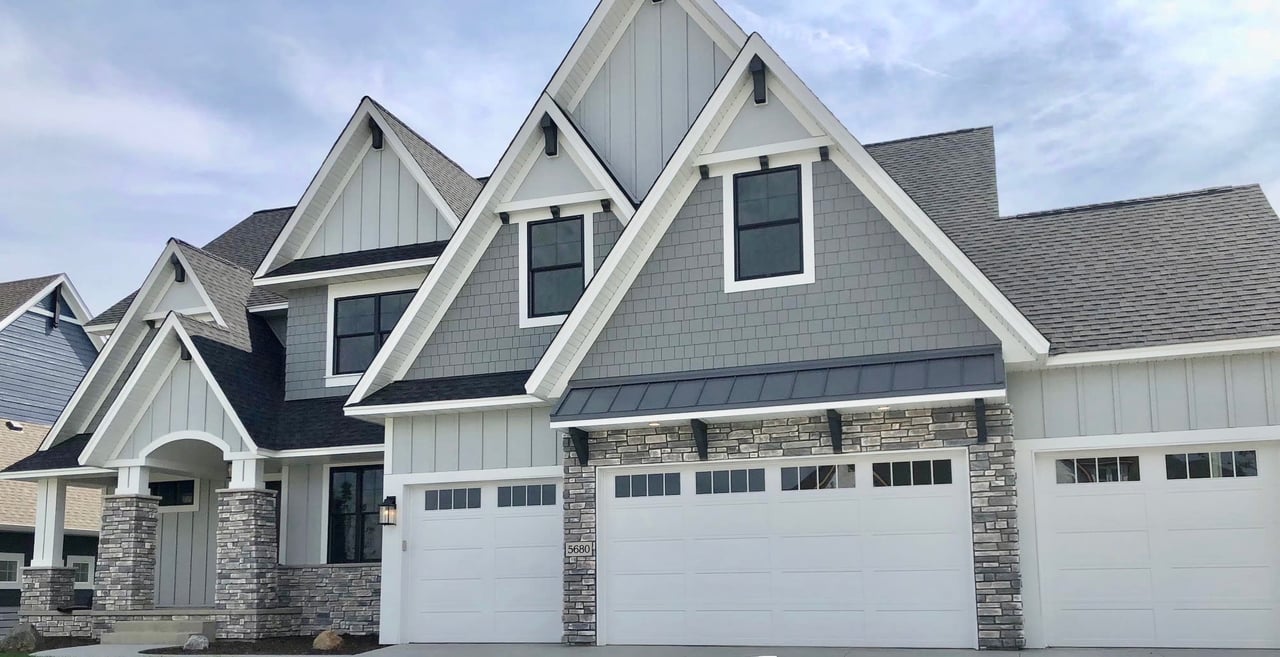
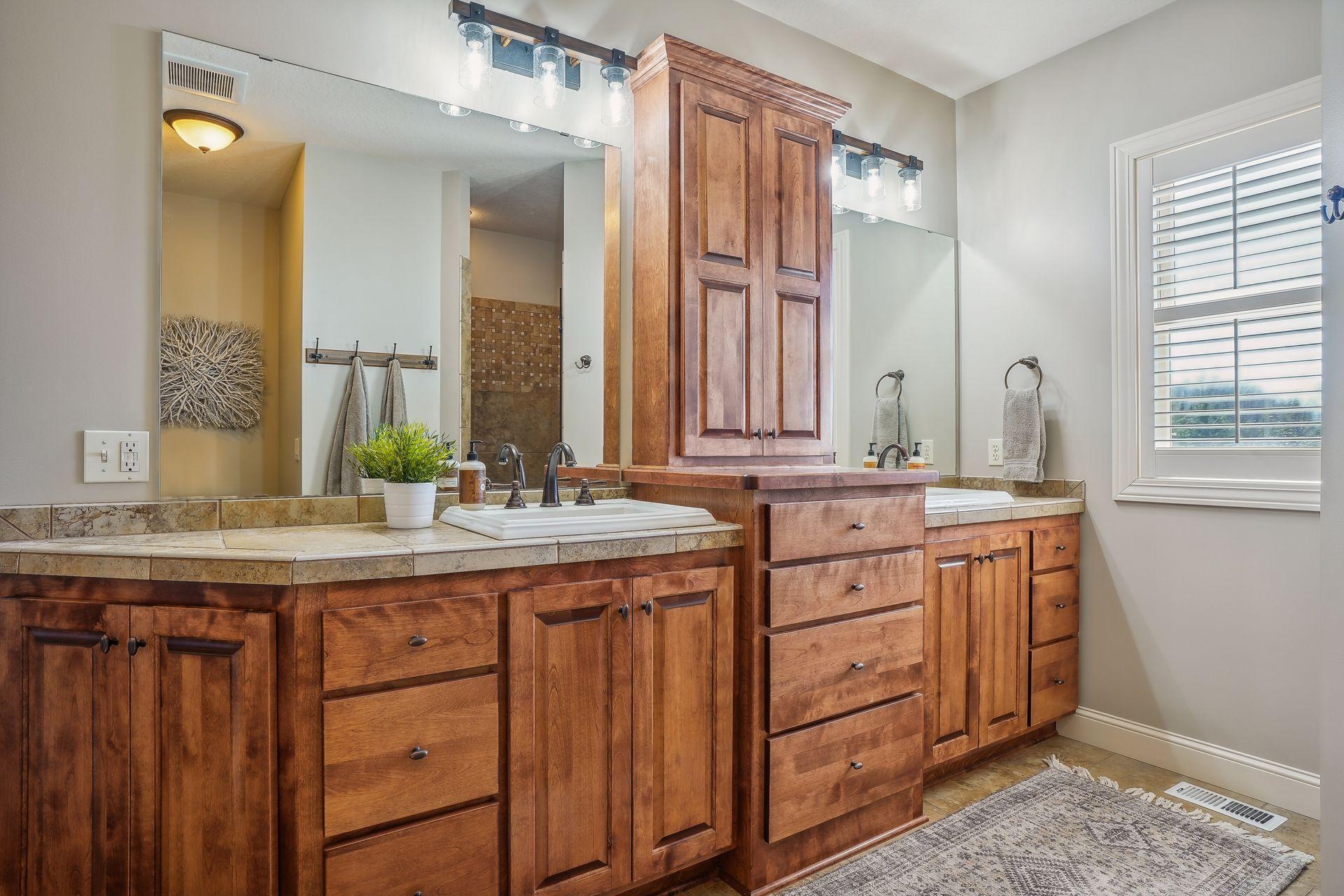
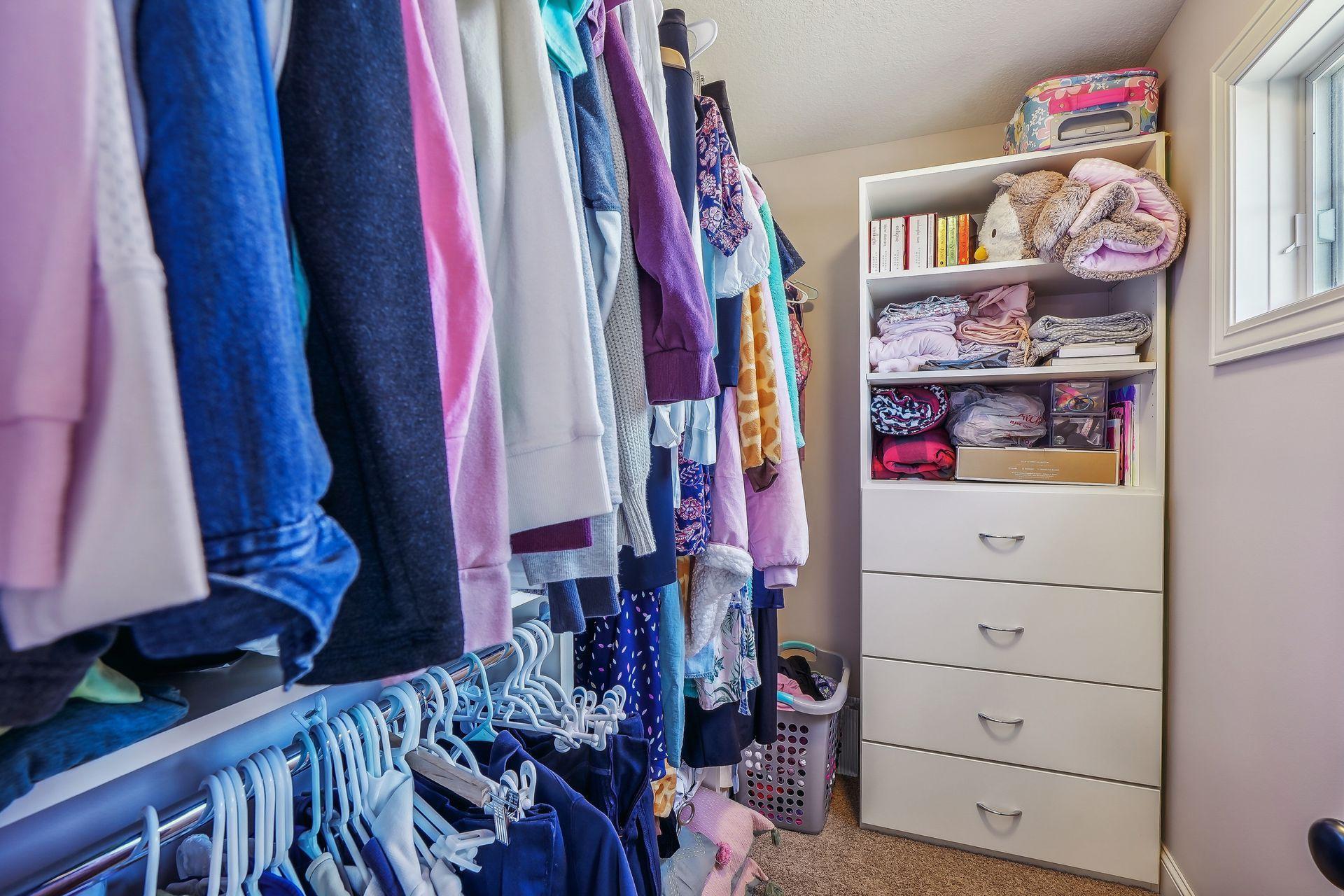
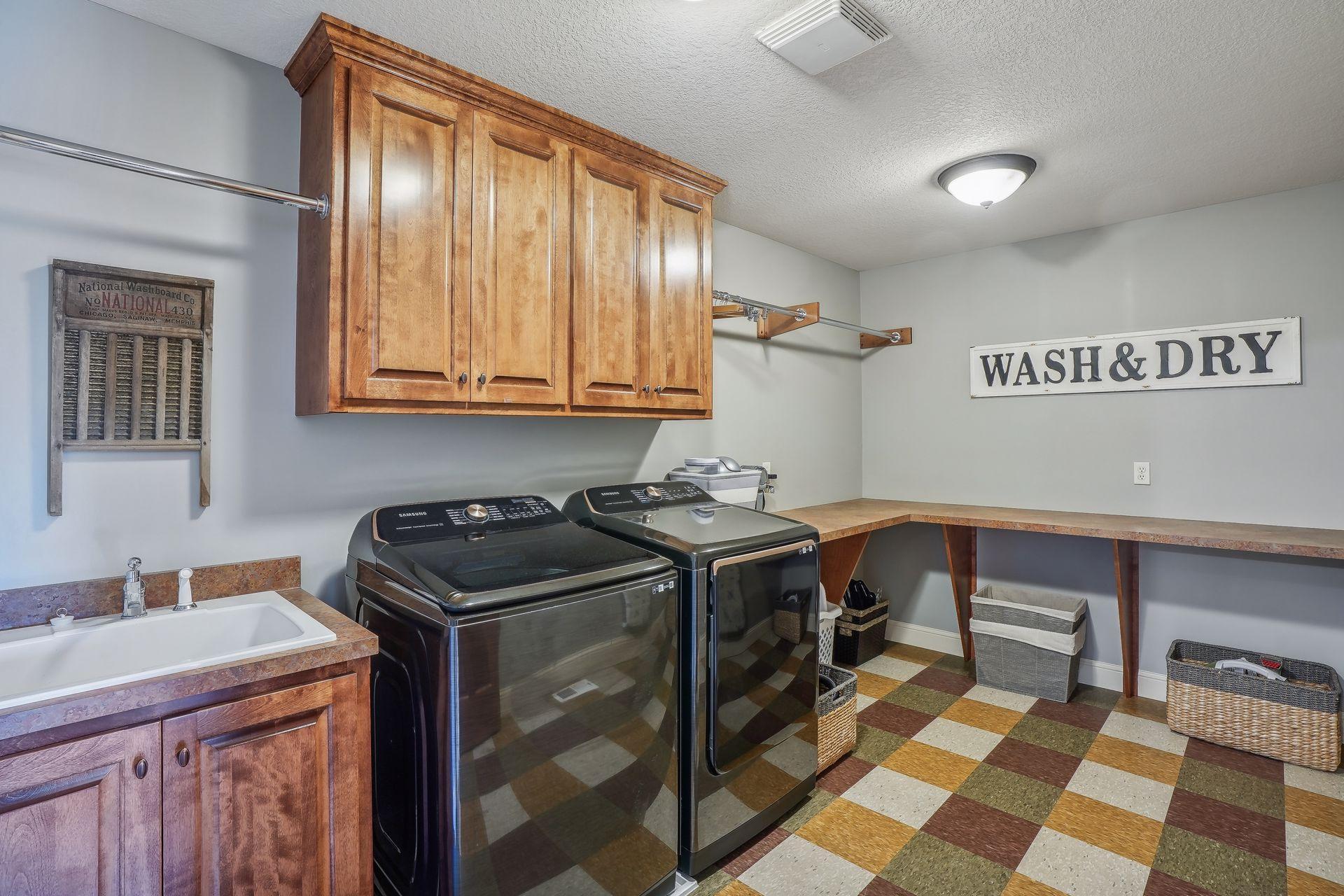
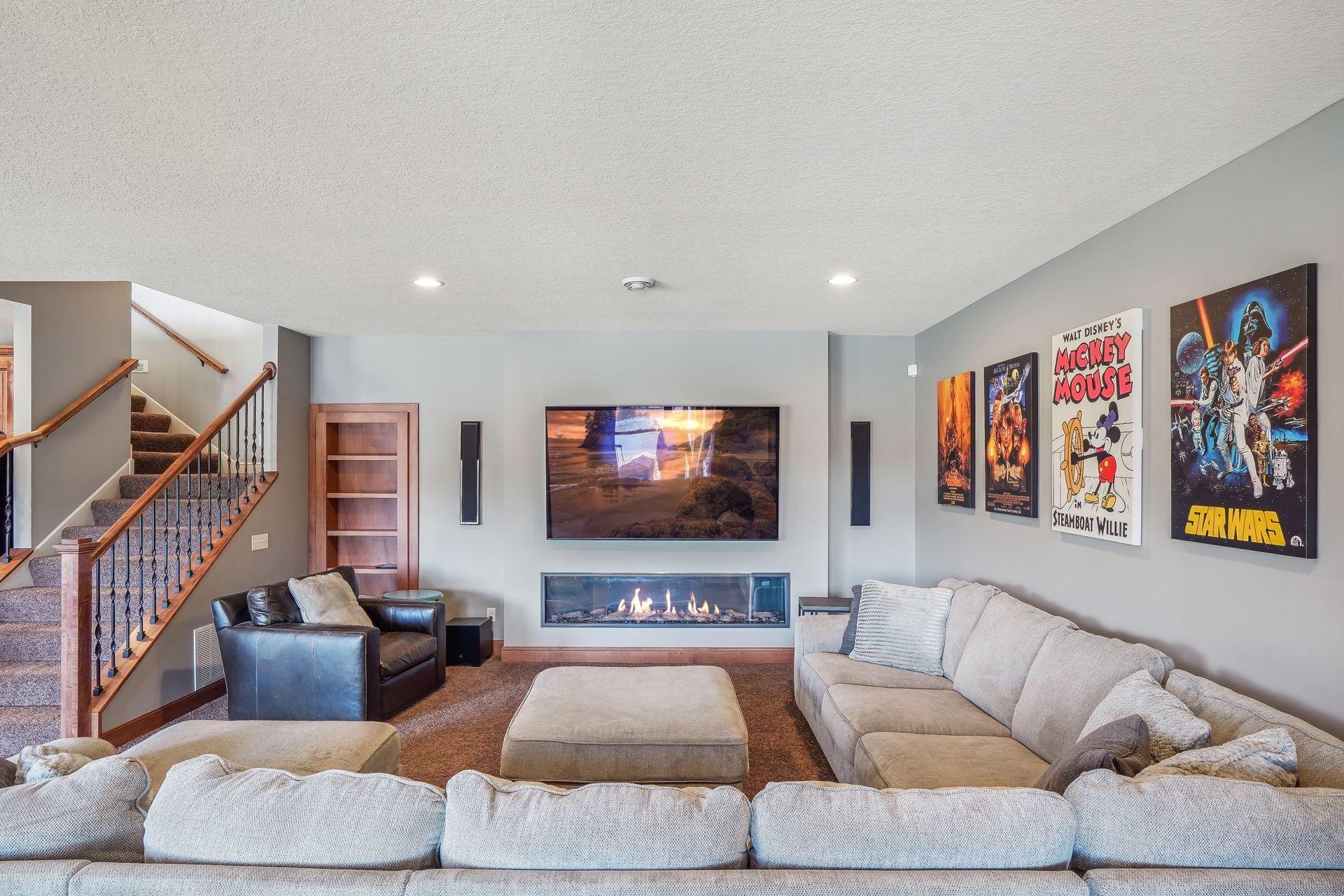
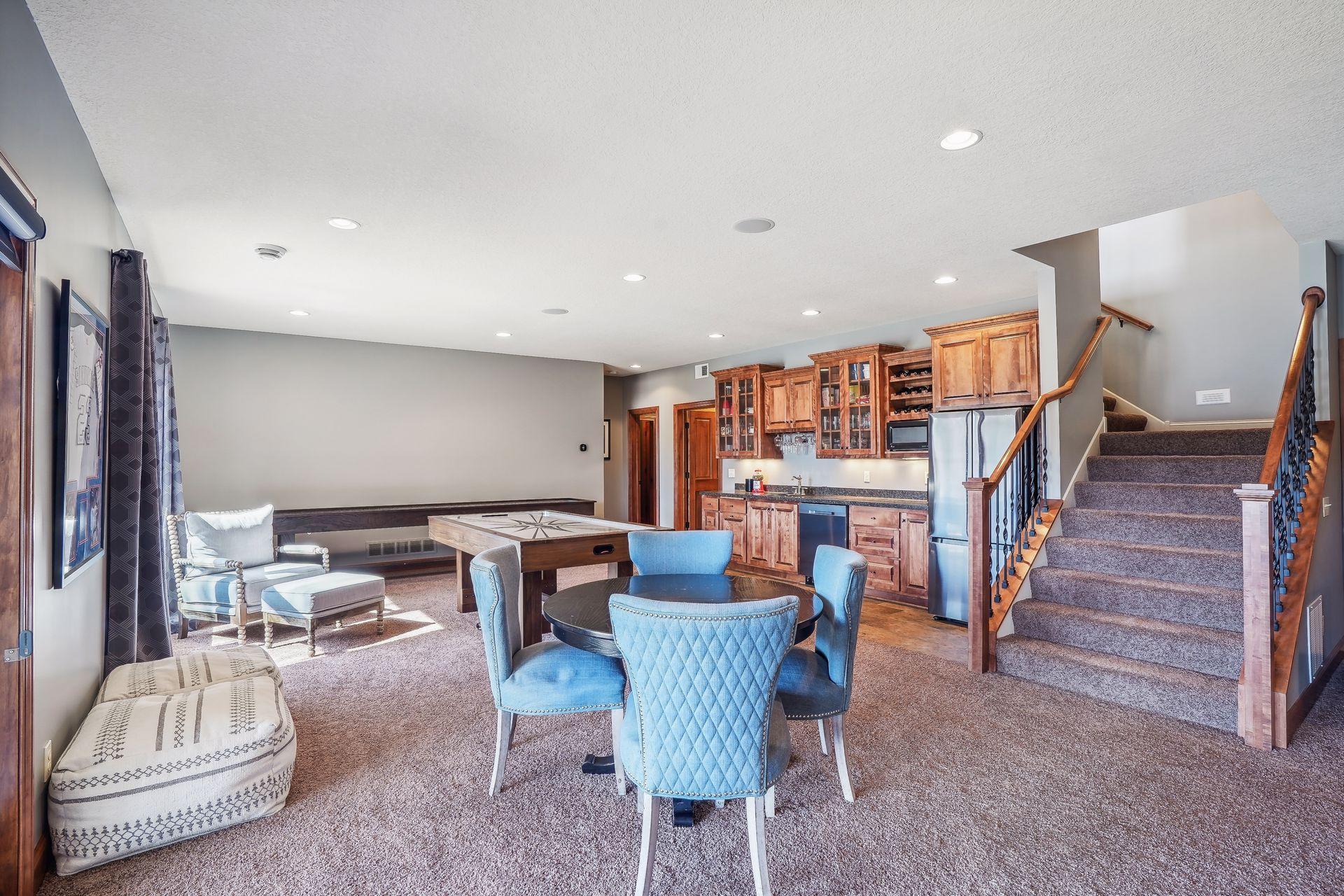
Time to Upgrade to this Luxury home in Maple Grove near Rush Creek Golf. Located in a cul-de-sac with great pond views. Enjoy the spacious open floorplan with gourmet kitchen, Cambria counters, main-level office and 1 level living suite with laundry! The upper-level offers three bedrooms all with walk-in closets, full bath with seperate vanities and large laundry room, plus loft. The walk-out lower level was designed for entertaining: oversized family room with walk-in closet for A/V storage, billiards/game area, full wet bar, exercise room, sauna, wine storage, 5th guest bedroom and and 3/4 bathroom! Additional features include expansive deck, LL patio & 4 car garage with high vaulted ceiling- perfect for boat storage, golf simulator or sport court area! Near Rush Creek Golf & many private schools, MGHS. 60K in recent upgrades, NEW Furance, water heater, see list+++ TURN KEY
Air-To-Air Exchanger, Cooktop, Dishwasher, Disposal, Dryer, Electric Water Heater, Exhaust Fan, Humidifier, Gas Water Heater, Microwave, Range, Refrigerator, Stainless Steel Appliances, Washer, Water Softener Owned
01
Exterior & Building
Stories
2
Garage Spaces
4.0
Water Source
City Water/Connected
Lot Features
Tree Coverage - Medium
Parking
Heated Garage
Heat Type
Forced Air, Fireplace(s), Radiant Floor
Air Conditioning
Central Air
Sewer
City Sewer/Connected
Disability Features
None
01
Lot & Area
Status
Inactive
Living Area
5,180 Sq.Ft.
Lot Size
0.75 Acres
MLS® ID
6506628
Type
Residential
Year Built
2007
Neighborhood
Plymouth community guide
Water Frontage
Pond
School District
Osseo
01
Finance
Sales Price
$975,000
Real Estate Taxes
$8,901/yr
HOA Fees
$235/yr
Mortgage Calculator
Estimate your monthly mortgage payment, including the principal and interest, property taxes, and HOA. Adjust the values to generate a more accurate rate.
Plymouth, Minnesota a suburb of Minneapolis located 20 minutes from Downtown
I have lived in the Plymouth area for over 20 years and raised 2 kids in theWayzata school district.I know each area of Plymouth neighborhoods. Here is the website for the City Of Plymouth and what they state. All information listed below can be found on the website.
Plymouth is desired to live in with the high rated schools and nearby companies such as Cargill, Boston Scientific, General Mills and many more.
Nationally recognized for its quality of life, Plymouth is located just 12 miles northwest of Minneapolis. It offers:
Extensive trails and parks
Picturesque open spaces
Strong neighborhoods
Diverse recreation programs
Highly regarded school districts
A variety of local businesses
Nearby shopping and entertainment districts
Easy access to downtown Minneapolis and its wide array of cultural and sports venues.
Location, Location, Location
Many major highways run through or are close to Plymouth, making it readily accessible to all within the metropolitan area. Interstate 494 runs through Plymouth as does Hwy. 55. Hwy. 169 is on the city’s eastern border and I-394 is within four miles from the center of Plymouth.
Population
While Plymouth’s growth is slowing, the community continues to see population increases. The most recent estimate from the U.S. Census Bureau puts Plymouth's population at 81,026 as of April 1, 2020, making Plymouth the state's seventh largest city.
Community Profile
For more information on Plymouth, visit the Community Profile area of the Metropolitan Council's website. The Metropolitan Council is a regional planning agency. The website includes information on demographics, economy and jobs, housing and more.
Plymouth’s Start as a Town Plymouth's beginning as a town occurred in 1855 on the northwest shores of what is now known as Parkers Lake. A gristmill and other structures were built in the area. In the spring of 1857, when Parkers Lake flooded, the mill was taken down and moved to Freeport, Minnesota. Freeport is now called Wayzata.
As new settlers arrived in the area, they decided to organize. The Hennepin County Board of Commissioners named the new settlement Plymouth. On May 11, 1858, a group of townspeople met at the home of Francis Day to open elections for town offices. On June 1, 1858, the group voted to change the town's name to Medicine Lake. This was used once at the town meeting, but for reasons, which were not recorded, it was never used again.
In 1862, during the conflict between white settlers and the Dakota at Fort Ridgeley, near New Ulm, the settlers of Plymouth formed a militia. When the Civil War started, Plymouth paid its volunteers $25 to enlist. At about this time, Plymouth's growth began to take on a new look. Schools and churches were built and a post office was located in Plymouth. By 1863, hotels were being built.
More changes occurred after the Civil War. By 1880, Plymouth boasted a population of 1,074, and reaped $667 in annual taxes. Farming became the trade of most settlers. Roads were built across Plymouth, making access to other towns possible. Medicine Lake had become a major tourist attraction and resorts were built around its shores.
Local Government Timeline As the character of the community evolved so did local government. Important dates in Plymouth’s local government history are:
May 18, 1955 – Plymouth incorporated as a village
Aug. 1, 1968 – The city adopted the council-manager form of government
Feb. 7, 1974 – Plymouth became a statutory city
Nov. 3, 1992 – Plymouth became a home rule charter city when voters opted to adopt a city charter
Jan. 1, 1993 – The Plymouth City Charter went into effect
The charter continued the council-manager form of government, and increased the size of the city council. Prior to the adoption of the Charter, the City Council was made up of five members elected at-large. The charter increased the council to seven members elected from four wards.
Our Town's Story The Plymouth Historical Society, CCX Media and the City of Plymouth present “Our Town’s Story,” a 45-minute film featuring an in-depth look at Plymouth’s history – from its early formation to its status as Minnesota’s seventh-largest city and fourth-largest economy.
The video highlights the area’s original Native American inhabitants – the Dakota – and Plymouth’s first settlers, as well as infrastructure development, school system establishment, parkland preservation, community event origins and more. Plymouth history comes to life in the video through archival photos, storytelling and interviews with those connected to the city’s history.
I have lived in the Plymouth area for over 20 years and raised 2 kids in the Wayzata school district. I know each area of Plymouth neighborhoods. Here is the website for the City Of Plymouth and what they state. All information listed below can be found on the website.
Plymouth is desired to live in with the high rated schools and nearby companies such as Cargill, Boston Scientific, General Mills and many more.
Nationally recognized for its quality of life, Plymouth is located just 12 miles northwest of Minneapolis. It offers:
Extensive trails and parks
Picturesque open spaces
Strong neighborhoods
Diverse recreation programs
Highly regarded school districts
A variety of local businesses
Nearby shopping and entertainment districts
Easy access to downtown Minneapolis and its wide array of cultural and sports venues.
Location, Location, Location
Many major highways run through or are close to Plymouth, making it readily accessible to all within the metropolitan area. Interstate 494 runs through Plymouth as does Hwy. 55. Hwy. 169 is on the city’s eastern border and I-394 is within four miles from the center of Plymouth.
Population
While Plymouth’s growth is slowing, the community continues to see population increases. The most recent estimate from the U.S. Census Bureau puts Plymouth's population at 81,026 as of April 1, 2020, making Plymouth the state's seventh largest city.
Community Profile
For more information on Plymouth, visit the Community Profile area of the Metropolitan Council's website. The Metropolitan Council is a regional planning agency. The website includes information on demographics, economy and jobs, housing and more.
Plymouth’s Start as a Town
Plymouth's beginning as a town occurred in 1855 on the northwest shores of what is now known as Parkers Lake. A gristmill and other structures were built in the area. In the spring of 1857, when Parkers Lake flooded, the mill was taken down and moved to Freeport, Minnesota. Freeport is now called Wayzata.
As new settlers arrived in the area, they decided to organize. The Hennepin County Board of Commissioners named the new settlement Plymouth. On May 11, 1858, a group of townspeople met at the home of Francis Day to open elections for town offices. On June 1, 1858, the group voted to change the town's name to Medicine Lake. This was used once at the town meeting, but for reasons, which were not recorded, it was never used again.
In 1862, during the conflict between white settlers and the Dakota at Fort Ridgeley, near New Ulm, the settlers of Plymouth formed a militia. When the Civil War started, Plymouth paid its volunteers $25 to enlist. At about this time, Plymouth's growth began to take on a new look. Schools and churches were built and a post office was located in Plymouth. By 1863, hotels were being built.
More changes occurred after the Civil War. By 1880, Plymouth boasted a population of 1,074, and reaped $667 in annual taxes. Farming became the trade of most settlers. Roads were built across Plymouth, making access to other towns possible. Medicine Lake had become a major tourist attraction and resorts were built around its shores.
Local Government Timeline
As the character of the community evolved so did local government. Important dates in Plymouth’s local government history are:
May 18, 1955 – Plymouth incorporated as a village
Aug. 1, 1968 – The city adopted the council-manager form of government
Feb. 7, 1974 – Plymouth became a statutory city
Nov. 3, 1992 – Plymouth became a home rule charter city when voters opted to adopt a city charter
Jan. 1, 1993 – The Plymouth City Charter went into effect
The charter continued the council-manager form of government, and increased the size of the city council. Prior to the adoption of the Charter, the City Council was made up of five members elected at-large. The charter increased the council to seven members elected from four wards.
Our Town's Story
The Plymouth Historical Society, CCX Media and the City of Plymouth present “Our Town’s Story,” a 45-minute film featuring an in-depth look at Plymouth’s history – from its early formation to its status as Minnesota’s seventh-largest city and fourth-largest economy.
The video highlights the area’s original Native American inhabitants – the Dakota – and Plymouth’s first settlers, as well as infrastructure development, school system establishment, parkland preservation, community event origins and more. Plymouth history comes to life in the video through archival photos, storytelling and interviews with those connected to the city’s history.